

Image: amazon

Image: amazon
Image: amazon
Image: amazon
Why You Can Trust This Comparison
This guide uses current official specifications from Sony and Bose, with the evidence date recorded as August 22, 2026. GearLab has not completed a controlled listening, microphone, comfort, or noise-cancellation test of these two headphones. Recommendations are therefore based on documented features, compatibility, and use-case tradeoffs rather than invented measurements or ownership claims.
What Changed Since the Original Article
The original version treated the WH-1000XM6 as a rumored future product. That is no longer accurate. Sony now publishes a complete WH-1000XM6 specification page, while Bose sells the second-generation QuietComfort Ultra Headphones. This rewrite removes projected scores, leak-based claims, estimated prices, and unsupported statements about comfort, call quality, or comparative ANC performance.
Sony WH-1000XM6 vs Bose QC Ultra 2nd Gen: Key Specifications
| Feature | Sony WH-1000XM6 | Bose QC Ultra 2nd Gen |
|---|---|---|
| Published weight | Approx. 8.96 oz | 0.583 lb (about 9.33 oz) |
| Battery life | Up to 30 hours NC on; 40 hours NC off | Up to 30 hours; 23 hours with Immersive Audio |
| Published charge time | Approx. 3.5 hours | Approx. 3 hours |
| Bluetooth version | 5.3 | 5.4 |
| Documented wireless formats | SBC, AAC, LDAC, LC3 | Bluetooth audio; Bose also documents Snapdragon Sound gaming support on compatible sources |
| Wired listening | Detachable stereo cable; passive operation supported | Analog cable plus USB-C digital audio |
| Noise-control features | Adaptive NC Optimizer, Ambient Sound, Quick Attention | Adjustable ANC, Aware Mode with ActiveSense, Immersive Audio |
| Water-resistance statement | No rating listed on the cited Sony specification page | Bose states that the headphones are not waterproof and have no IP rating |
Research note: Published battery figures come from manufacturer test conditions and are not guaranteed runtime for every volume level, codec, call pattern, or feature combination.
When the Sony WH-1000XM6 Makes More Sense
The Sony is the clearer fit for an Android listener who specifically wants LDAC. Sony lists SBC, AAC, LDAC, and LC3, so buyers can match codec support to a compatible phone or computer instead of relying on a vague high-resolution-audio claim. The WH-1000XM6 also supports a detachable analog cable and passive operation, which is useful when a battery is low or a source has a headphone jack.
Sony publishes a weight of approximately 8.96 ounces, slightly below Bose’s published 0.583-pound headphone weight. That difference is small and does not prove better comfort, but it may matter to a buyer sensitive to headband weight. Sony also lists up to 40 hours of playback when noise cancelling is off, compared with its own 30-hour figure when noise cancelling is on.
Sony strengths
- LDAC and LC3 are explicitly listed in Sony’s supported audio formats.
- Up to 40 hours of playback is listed when noise cancelling is off.
- Passive wired operation is documented.
- Adaptive NC Optimizer and Quick Attention are included.
Sony drawbacks
- The cited Sony specification page does not list a water-resistance rating.
- A 3.5-hour published charge time is longer than Bose’s listed 3-hour figure.
- Codec availability does not guarantee audible improvement; the source device, recording, fit, and listening environment still matter.
- GearLab does not have controlled evidence that Sony beats Bose for ANC, microphone quality, or comfort.
When the Bose QC Ultra 2nd Gen Makes More Sense
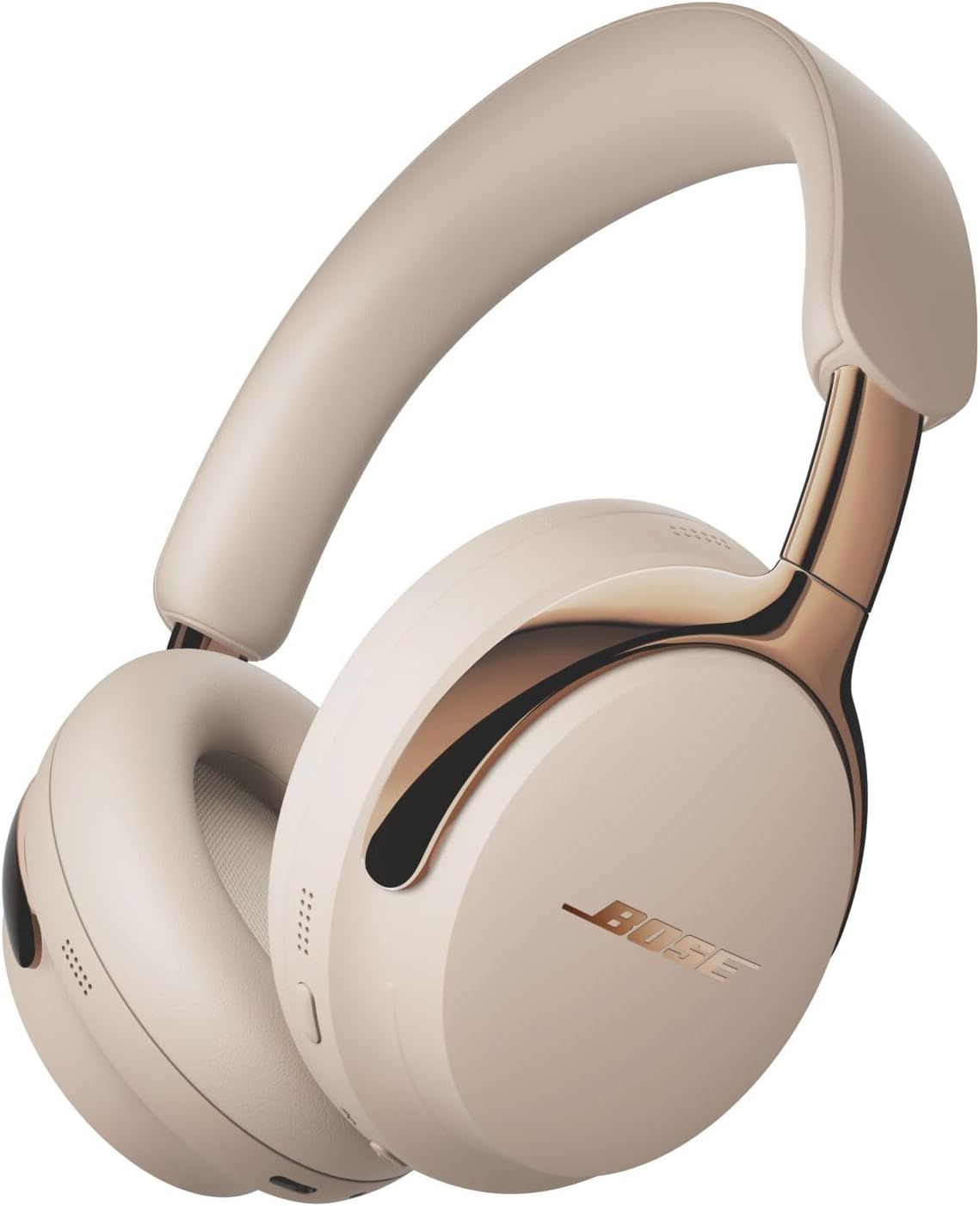
Bose is the more distinctive option for buyers who want USB-C digital audio from a compatible computer or mobile device. Bose documents 16-bit audio at 44.1 or 48 kHz over USB-C. That gives desktop and laptop users a wired digital path without depending on Bluetooth codec support.
The second-generation QC Ultra also lists removable cushions, adjustable noise cancelling, Bose Immersive Audio, and a Cinema Mode for video. Bose publishes up to 30 hours of battery life, dropping to 23 hours with Immersive Audio enabled. Buyers should treat the comfort language on the product page as a manufacturer claim and use the return period to evaluate fit personally.
Bose strengths
- USB-C digital audio is documented for compatible sources.
- Removable cushions can make maintenance and replacement more practical.
- Adjustable ANC, Aware Mode, ActiveSense, Immersive Audio, and Cinema Mode offer several listening modes.
- Bose currently advertises a 90-day return period for direct purchases, subject to its terms.
Bose drawbacks
- Bose states that the headphones are not waterproof and have no IP rating.
- Immersive Audio reduces the published battery figure from 30 to 23 hours.
- The published headphone weight is slightly higher than Sony’s.
- GearLab does not have controlled evidence that Bose is more comfortable or better for calls than Sony.
Real-World Buying Scenarios
Frequent flights and long commutes
With noise cancelling enabled, both manufacturers publish up to 30 hours, so battery alone does not separate them. Sony becomes more attractive if you are willing to turn noise cancelling off for a longer published maximum. Bose becomes more attractive if Immersive Audio or its mode controls are central to how you listen. For either model, confirm that the case size fits your bag and carry the appropriate cable for in-flight systems.
Home office and video calls
Do not choose based on unsupported claims that one microphone is automatically better. Check whether your work computer permits the required Bluetooth profile or wired connection, whether multipoint behavior fits your devices, and whether your meeting software handles the headset correctly. Bose’s USB-C audio can be useful on a compatible computer; Sony’s analog passive mode offers a simple fallback.
Android music listening
Sony is the safer specification match when LDAC is a requirement because Sony lists it directly. Confirm that the phone also supports LDAC and that the setting is enabled. A codec label alone does not guarantee better sound than a well-implemented AAC or USB connection.
PC gaming and movies
Bose documents USB-C audio and a Snapdragon Sound gaming mode on compatible sources. Sony lists LC3 and a broad Bluetooth profile set, but actual latency depends on both ends of the connection. Competitive gaming still benefits from a verified wired or dedicated low-latency path rather than assuming ordinary Bluetooth will be delay-free.
How to Choose Without Overpaying
Start with the feature that changes your daily use. Buy Sony for documented LDAC support, the lower published weight, or the longer NC-off battery figure. Buy Bose for USB-C digital audio, removable cushions, or Bose’s immersive listening modes. If none of those differences matters, compare the current delivered price, warranty handling, return window, replacement-cushion availability, and comfort on your own head.
For lower-cost options, see our budget noise-cancelling headphone guide. Office listeners may also want our closed-back vs open-back office comparison, while buyers focused on connection quality can read wired vs wireless headphones for music.
FAQ
Does the Sony WH-1000XM6 exist now?
Yes. Sony publishes an official support and specification page for the WH-1000XM6. The old rumor-based version of this article is obsolete.
Which has better battery life with noise cancelling on?
Both manufacturers publish an up-to-30-hour figure in their standard noise-cancelling use. Bose lists 23 hours with Immersive Audio enabled, while Sony lists up to 40 hours when noise cancelling is off.
Which is more comfortable?
The official specifications cannot answer that for every person. Sony is slightly lighter on paper; Bose lists removable cushions and markets plush comfort. Head shape, glasses, ear size, heat, and clamping preference make a return window more useful than a universal comfort claim.
Can either headphone play audio over a cable?
Yes. Sony documents a detachable stereo cable and passive operation. Bose includes an analog audio cable and also supports compatible USB-C digital audio.
Which is better for Android phones?
Sony is the clearer choice when LDAC is specifically required. Bose may be preferable when a compatible Snapdragon Sound feature or USB-C audio path matters more. Verify phone compatibility before buying.
Are either of these good workout headphones?
Bose explicitly says its model is not waterproof and has no IP rating. Sony’s cited specification page does not list a water-resistance rating. For sweat-heavy workouts, choose a product with a documented water-resistance rating and a secure sport-oriented fit.
Official Sources
- Sony WH-1000XM6 official specifications
- Sony WH-1000XM6 official product page
- Bose QuietComfort Ultra Headphones (2nd Gen) official product and technical specifications
Final Verdict
The WH-1000XM6 is the better specification match for LDAC users, buyers who value the lower published weight, and listeners who want the longer NC-off battery maximum. The Bose QC Ultra 2nd Gen is the better fit for USB-C audio, removable cushions, and Bose’s immersive listening modes. Neither should be declared the universal winner without controlled comparative testing and a personal fit check.
Where to Buy
- Check current Sony WH-1000XM6 availability on Amazon
- Check current Bose QC Ultra 2nd Gen availability on Amazon
As an Amazon Associate, we earn from qualifying purchases.