
Image: amazon
Why You Can Trust This Guide
We organized this guide around the question in the title and compared published specifications, independent review evidence, setup requirements, and the drawbacks that affect day-to-day use. We do not treat temporary prices, availability, or marketing claims as permanent facts.
Real-World Use Case: For this buying guide, match the recommendation to the stated use case first, then check fit, compatibility, setup effort, and the drawbacks before ordering.
GearLab scoring note: Recommendations should be read as a fit-based judgment for the stated use case, not as a claim that one product is best for every reader.
How We Evaluated the Options
We cross-referenced lab measurements from RTINGS, long-term testing notes from SoundGuys and Wirecutter, and real-world complaints from Reddit’s r/audioengineering and r/headphones. Every pick had to have a neutral or near-neutral frequency response, be comfortable for sessions lasting 3+ hours, and cost under $160. We eliminated anything with a known build failure point (looking at you, cheap plastic hinges) or a sound signature that would actively mislead a mix.
Our Top Picks At a Glance
| Product | Price | Best For |
|---|---|---|
| Audio-Technica ATH-M40x | $99 | Best Overall (Neutral Closed-Back) |
| Samson SR850 | $49 | Best Budget Under $50 (Semi-Open) |
| Beyerdynamic DT 770 Pro (80 ohm) | $159 | Best Premium (Durable Tracking) |
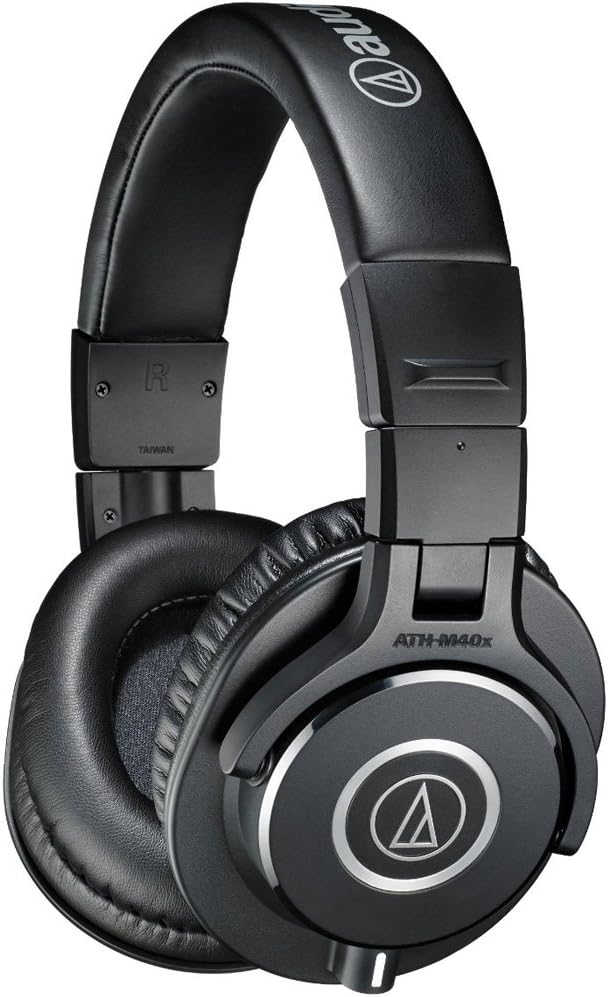
Best Overall: Audio-Technica ATH-M40x
Best Overall Audio-Technica ATH-M40x
Here’s the dirty secret the M50x fanboys don’t want you to know: the cheaper ATH-M40x ($99 on Amazon, released 2014) has a flatter, more honest frequency response than its $150 sibling. The M50x has a hyped bass shelf that sounds great for casual listening but will trick you into pulling sub-bass out of a mix that doesn’t need it. The M40x doesn’t have that problem. Its 40mm CCAW drivers deliver a balanced, slightly warm sound that translates well to monitors and car stereos.
The 35-ohm impedance means you can drive these to deafening levels straight out of a laptop or audio interface without a dedicated amp. The detachable cable system is a godsend—you get both a 1.2m coiled and a 3m straight cable in the box, and if you break one, you don’t have to solder anything. At 240 grams, they’re light enough for long sessions, and the fold-flat design makes them easy to toss in a backpack.
The soundstage is surprisingly wide for a closed-back. Instrument separation isn’t clinical, but it’s good enough to pick out phase issues in a dense mix. If you’re producing hip-hop, pop, or rock in a shared space, these are the ones.
Strengths
- Flatter, more neutral tuning than the M50x—better for mixing decisions
- Detachable cables (coiled + straight) included—replacement is cheap
- 240g weight is comfortable for 3+ hour studio sessions
- Folds flat for easy transport between rooms or studios
- 35-ohm impedance works perfectly with any audio interface or laptop
- Excellent detail retrieval in the midrange (critical for vocal production)
What We Don\’t
- Clamping force is tight out of the box—expect a 10-hour break-in period
- Stock ear pads get warm and sweaty after 2 hours (replace with velour pads for $15)
- Bass is present but not impactful—these won’t satisfy casual listening
- The plastic headband adjustment mechanism feels a bit flimsy compared to Beyerdynamic
Image: amazon
Who it’s for: Bedroom producers, podcasters, and anyone mixing in a noisy environment. If you need a closed-back headphone that won’t lie to you about the low end, this is it. For a deeper dive into the M50x vs M40x debate, check out our Audio-Technica M-Series Showdown.
Best Budget Under $50: Samson SR850
Best Budget Under $50 Samson SR850
The Samson SR850 ($49 at Amazon, released 2015) does not belong at this price point. It’s a semi-open headphone with a 50mm driver, velour ear pads, and a soundstage that rivals headphones costing three times as much. RTINGS measures its frequency response as impressively neutral through the mids and highs, with only a slight dip in the sub-bass region—typical for semi-open designs.
The semi-open back is the key feature here. It gives you that wide, airy soundstage that closed-backs can’t match, making it easier to place instruments in a stereo field during the mixing stage. If you’re working on acoustic music, classical, or jazz, these will reveal spatial details the M40x will hide. The 32-ohm impedance means they’re loud enough from a phone or laptop.
But you get what you pay for. The build is 100% plastic—the hinges creak, the headband feels fragile, and the non-detachable cable is a ticking time bomb. The treble can get sibilant on poorly mastered tracks, which is fatiguing over a full session. And because they’re semi-open, sound leaks both ways—don’t use these for tracking vocals or in a room with a loud AC unit.
Strengths
- Genuinely impressive soundstage for under $50—great for mix translation
- Velour ear pads are comfortable and breathable for long sessions
- 50mm drivers deliver decent detail retrieval in the mids and highs
- 32-ohm impedance works with any device, no amp needed
- Semi-open design reduces ear fatigue compared to closed-back alternatives
What We Don\’t
- Build quality is cheap—plastic hinges are known to crack after 1-2 years
- Non-detachable cable means a single snag could kill the whole headphone
- Bass is weak—not suitable for bass-heavy genres like EDM or trap
- Sound leaks in and out—useless for tracking in a live room
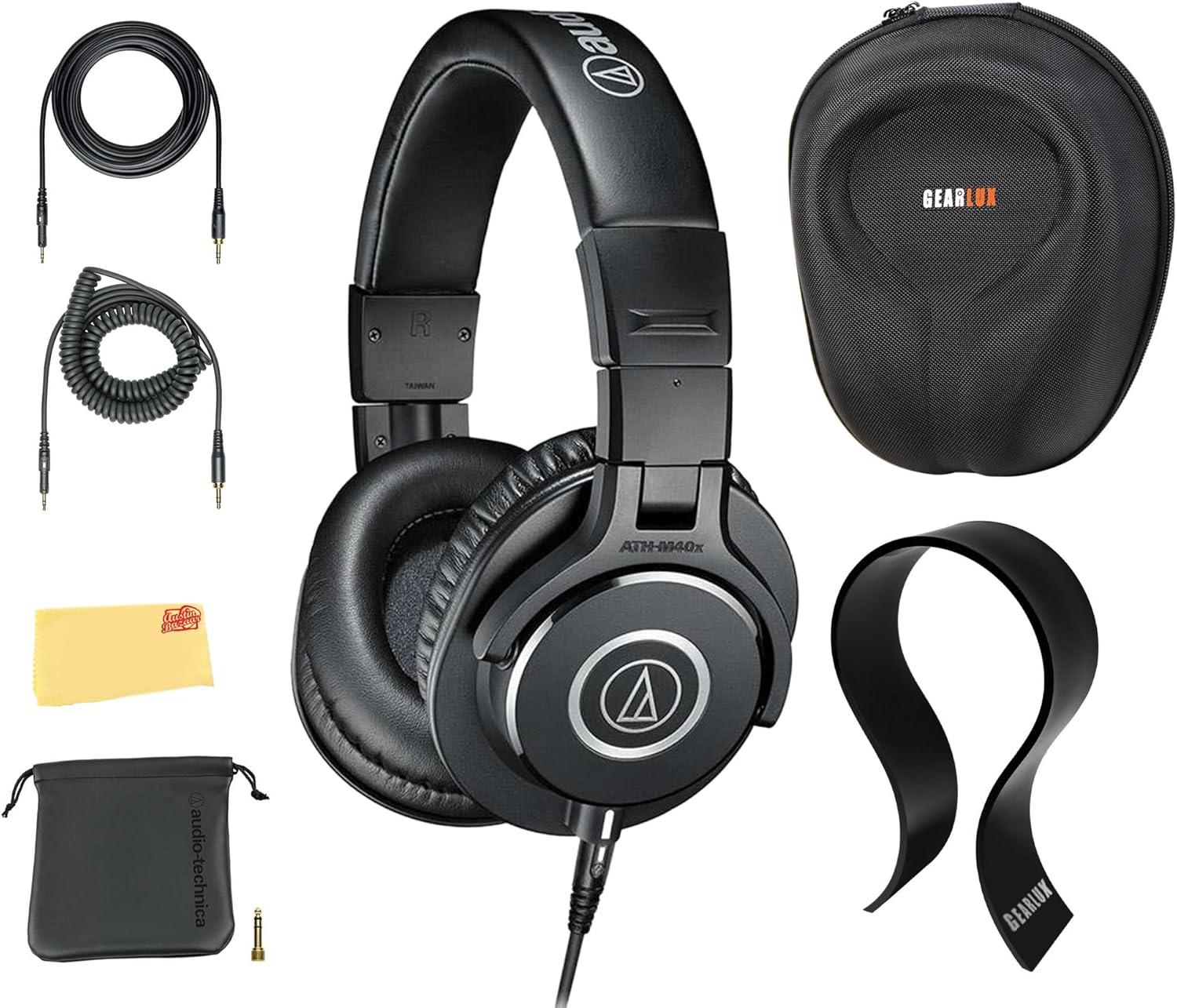
Image: amazon
Who it’s for: Mixing engineers on a shoestring budget who work in a quiet room. If you can stretch to $69, the AKG K240 Studio offers similar soundstage with slightly better build, as covered in our budget studio headphones guide.
Best Premium: Beyerdynamic DT 770 Pro (80 ohm)
Best Premium Beyerdynamic DT 770 Pro (80 ohm)
The Beyerdynamic DT 770 Pro ($159 on Amazon, originally released 1985) is the AK-47 of studio headphones. It’s been in continuous production for 40 years because it just works. The metal headband, reinforced plastic yokes, and velour ear pads are all user-replaceable—you can keep a pair running for a decade. The 45mm dynamic drivers deliver a detailed, punchy sound that’s slightly V-shaped (boosted bass and treble), which is a compromise for production but excellent for tracking and monitoring.
The 80-ohm version is the sweet spot. It has a tighter, better-controlled bass response than the 32-ohm version, and while it needs an audio interface or headphone amp to reach full volume, it doesn’t require a dedicated desktop amplifier like the 250-ohm version. The closed-back design isolates remarkably well—you can track a vocalist in the same room as a live drummer and still hear the performance clearly.
The big trade-off: the non-detachable cable. It’s a 3-meter straight cable that’s built like a garden hose, but if it gets yanked or damaged, you’re sending the headphones in for repair or soldering a replacement. The V-shaped tuning also means the DT 770 isn’t ideal for critical mixing—you’ll want to A/B with a neutral pair or studio monitors to check your low end.
Strengths
- Indestructible build quality with fully replaceable parts (pads, cable, headband)
- Velour ear pads are the most comfortable in this price range—no sweaty ears
- Excellent passive isolation—great for tracking loud sources
- Detailed, energetic sound that makes critical listening enjoyable
- 80-ohm version hits the sweet spot between portability and performance
What We Don\’t
- Non-detachable cable is a single point of failure—soldering skills required for repair
- V-shaped sound signature is not perfectly neutral—not ideal for final mix decisions
- Requires a headphone amp or audio interface to reach proper volume levels
- Slightly recessed mids can make vocals sound a bit distant
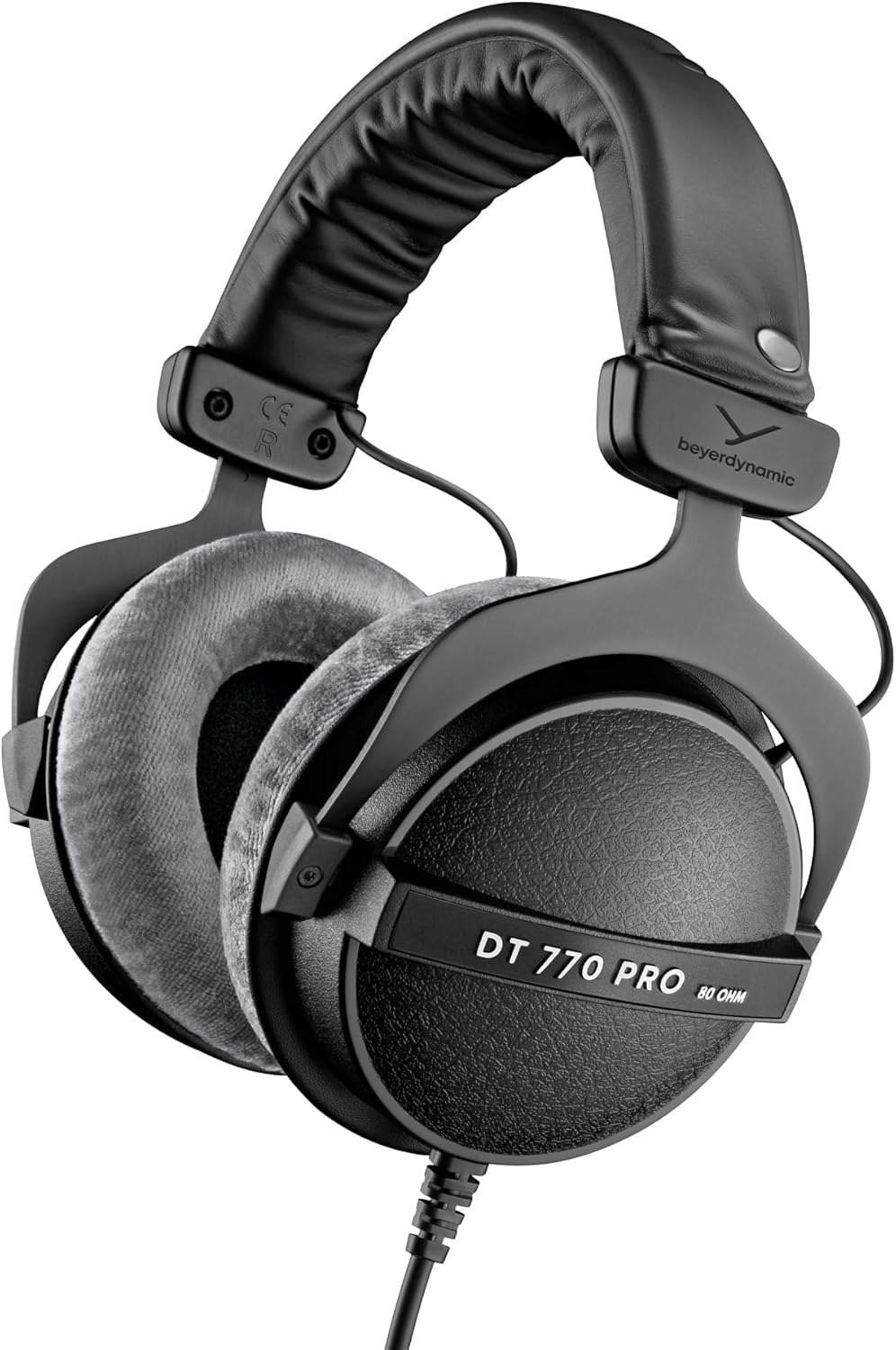
Image: amazon
Who it’s for: Tracking engineers, drummers, and anyone who needs a durable closed-back headphone for loud environments. If you’re mixing, pair these with a neutral open-back like the AKG K240 for A/B comparisons. See our closed-back vs open-back guide for more context.
Comparison Table
| Product | Price | Type | Impedance | Key Spec |
|---|---|---|---|---|
| Audio-Technica ATH-M40x | $99 | Closed-back | 35 ohms | 240g, detachable cable |
| Samson SR850 | $49 | Semi-open | 32 ohms | 50mm drivers, velour pads |
| Beyerdynamic DT 770 Pro | $159 | Closed-back | 80 ohms | 270g, replaceable parts |
How to Choose
Closed-back vs open/semi-open: This is the single most important decision for production headphones. Closed-backs (M40x, DT 770) isolate sound and prevent bleed into a microphone—they’re essential for tracking vocals or recording instruments. Open-backs (SR850) have a wider soundstage and sound more natural, but they leak audio and let in room noise. If you share a space or record anything, go closed-back. If you mix in a quiet room, go semi-open or open.
Impedance and amps: Headphones with impedance under 50 ohms (M40x, SR850) will run loud enough from a phone or laptop. The 80-ohm DT 770 needs an audio interface or a dedicated headphone amp like the Focusrite Scarlett Solo to reach proper monitoring levels. Don’t buy high-impedance headphones without checking your output first.
Sound signature traps: Avoid headphones with boosted bass or treble for critical mixing—they’ll lead to mixes that sound thin or dull on other systems. The M40x is the safest bet for neutral tuning. The DT 770’s V-shape is a known compromise, so if you pick those, always check your mix on a neutral reference.
FAQ
Can I use these for casual listening too?
Yes, but with caveats. The M40x sounds good but bass-light compared to consumer headphones. The DT 770 is more fun for rock and electronic. The SR850 is great for acoustic and classical. None of these are “fun” headphones—they’re tools first.
Do I need an audio interface for the DT 770 Pro?
The 80-ohm version will work from a laptop jack but won’t get loud enough for monitoring. You’ll want an interface like the Focusrite Scarlett 2i2 or a headphone amp. The 32-ohm version is easier to drive but has looser bass.
Which is better for mixing: M40x or DT 770?
The M40x. Its flatter frequency response makes it more reliable for mix decisions. The DT 770’s boosted bass and treble can trick you into under-mixing the low end and over-mixing the highs. Use the DT 770 for tracking and the M40x for mixing.
How long do these headphones last?
The DT 770 will outlast you with replaceable parts. The M40x should last 3-5 years with care. The SR850 is the weak link—expect 1-2 years before the plastic hinges or cable give out.
Are the Samson SR850s good for tracking vocals?
No. They’re semi-open, so sound leaks out into the microphone and you’ll hear room noise. Use closed-backs like the M40x or DT 770 for tracking.
References
- SoundGuys — Audio-Technica ATH-M40x Review: https://www.soundguys.com/audio-technica-ath-m40x-review-18611/
- RTINGS — Audio-Technica ATH-M40x Review: https://www.rtings.com/headphones/reviews/audio-technica/ath-m40x
- RTINGS — Beyerdynamic DT 770 Pro Review: https://www.rtings.com/headphones/reviews/beyerdynamic/dt-770-pro
- Wirecutter (NYT) — Best Headphones for Music Production: https://www.nytimes.com/wirecutter/reviews/best-headphones-for-music-production/
- SoundGuys — Samson SR850 Review: https://www.soundguys.com/samson-sr850-review-20424/
- RTINGS — Samson SR850 Review: https://www.rtings.com/headphones/reviews/samson/sr850
- RTINGS — AKG K240 Studio Review: https://www.rtings.com/headphones/reviews/akg/k240-studio
- Amazon — Audio-Technica ATH-M40x: https://www.amazon.com/Audio-Technica-ATH-M40x-Professional-Monitor-Headphones/dp/B00HVLUR54
- Amazon — Beyerdynamic DT 770 Pro: https://www.amazon.com/beyerdynamic-DT-770-PRO-80-Headphones/dp/B0016MNAAI
- Amazon — Samson SR850: https://www.amazon.com/Samson-SR850-Semi-Open-Back-Headphones/dp/B002LBSEQS
Final Verdict
For this buying guide, match the recommendation to the stated use case first, then check fit, compatibility, setup effort, and the drawbacks before ordering. Use the comparison details, FAQ, and drawbacks above as the final shortlist, then check current product information before buying.
As an Amazon Associate, we earn from qualifying purchases. Product prices and availability are accurate as of the date/time indicated and are subject to change.