
Quick Answer: The choice between a traditional dash cam and a mirror cam comes down to what you value more: video quality or utility. If you need to read license plates at night and want reliable parking mode, get a VIOFO A229 Pro ($249.99). If you drive an SUV or truck with poor rear visibility and want a stealthy, clean install, get a Wolfbox G900 Pro ($199.99). The dash cam wins for footage clarity; the mirror cam wins for rear-view coverage and theft deterrence.
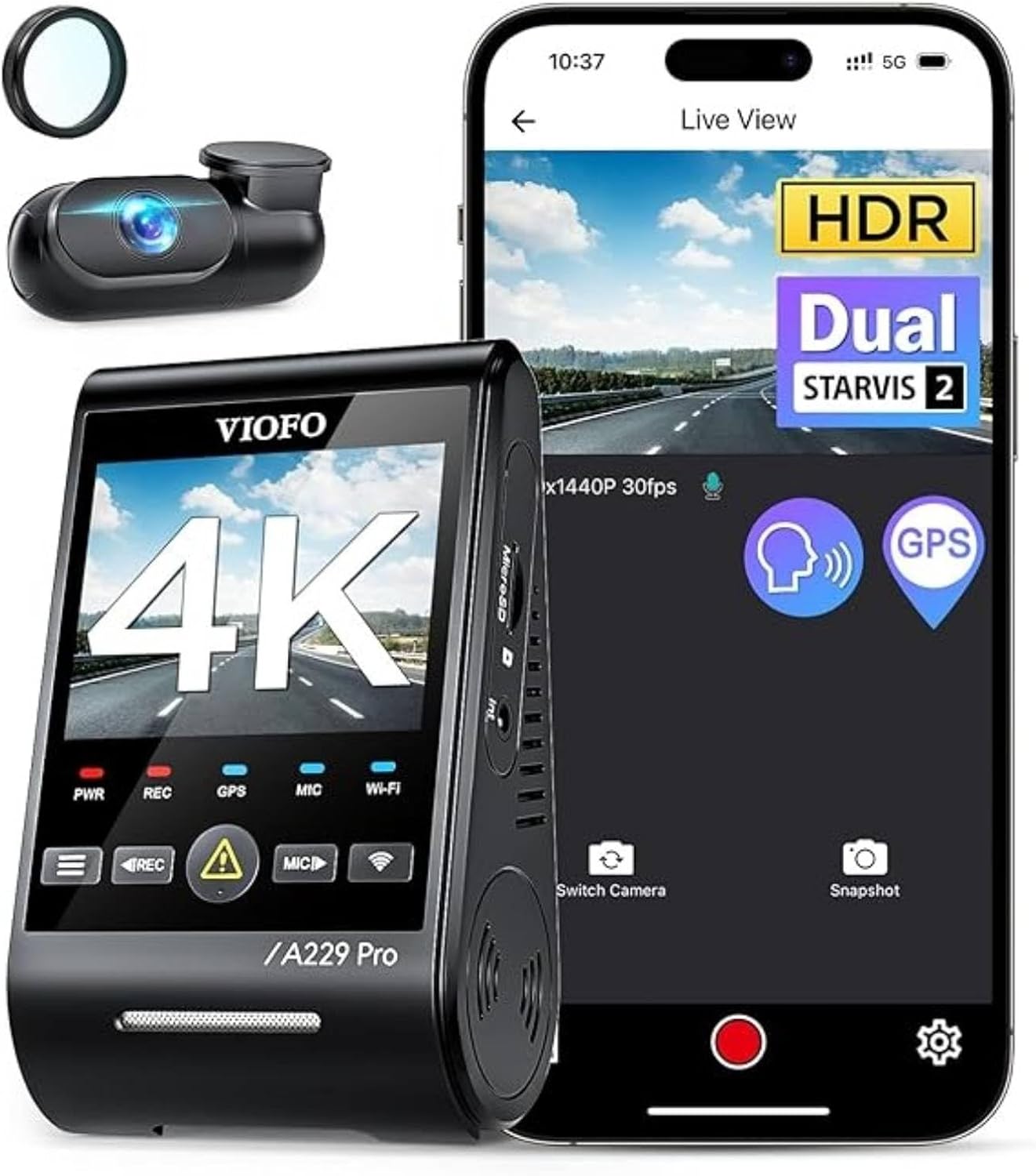
Image: amazon
Why You Can Trust This Guide
We organized this guide around the question in the title and compared published specifications, independent review evidence, setup requirements, and the drawbacks that affect day-to-day use. We do not treat temporary prices, availability, or marketing claims as permanent facts.
Real-World Use Case: For this comparison, focus on the trade-off that changes the decision in your room, vehicle, desk, or daily routine rather than choosing by the longest feature list.
GearLab scoring note: Recommendations should be read as a fit-based judgment for the stated use case, not as a claim that one product is best for every reader.
How We Evaluated the Options
We cross-referenced lab-grade video quality tests from RTINGS, editorial consensus from TechRadar and Wirecutter, and real-world owner feedback from the Reddit r/Dashcam community. We also considered installation complexity, heat tolerance, and parking mode reliability — factors that don’t show up on spec sheets but matter daily. The research brief above summarizes current market leaders as of early 2025.
Our Top Picks At a Glance
| Product | Price | Best For |
|---|---|---|
| VIOFO A229 Pro | $249.99 | Best video quality & parking mode |
| Wolfbox G900 Pro | $199.99 | Best mirror cam for SUVs/trucks |
| VanTop H612 | $89.99 | Budget mirror cam |
Best Overall: VIOFO A229 Pro
Best Overall VIOFO A229 Pro
The VIOFO A229 Pro ($249.99 on Amazon, released late 2023, updated 2024) is the gold standard for a reason: it records 4K front footage using the Sony Starvis 2 sensor, which means you can actually read license plates at night. The rear camera captures 2K video — not just 1080p like most mirror cams. This matters when you’re trying to identify a hit-and-run driver or prove fault in an accident.
The build quality is what you’d expect from a dedicated dash cam. It uses a supercapacitor instead of a lithium battery, so it won’t swell or fail in summer heat. Parking mode is genuinely useful — buffered recording means it captures the 10 seconds before an impact, not just after. The GPS module logs speed and location, and Wi-Fi lets you pull clips to your phone without removing the SD card.
Installation is straightforward: adhesive mount to the windshield, plug into the 12V socket. The rear camera cable routes along the headliner, but the kit includes a trim tool and cable clips. You don’t need to remove your stock mirror or deal with complex wiring.
The trade-off is windshield clutter. The unit is visible below the mirror, and the 2.4-inch screen is tiny. You won’t use the screen for anything except setup — it’s not a rearview replacement. Also, the rear camera field of view is narrower than a mirror cam’s, so you won’t see your side mirrors or rear passengers.
Strengths
- 4K front (Sony Starvis 2) + 2K rear — best video quality in this comparison
- Supercapacitor power supply — no battery swelling in hot cars
- Buffered parking mode captures 10 seconds before impact
- GPS and Wi-Fi built-in
- Reliable adhesive mount — won’t shake loose on rough roads
What We Don\’t
- Visible windshield clutter — unit hangs below the mirror
- Rear camera field of view is narrower than mirror cams (140° vs 170°)
- Tiny 2.4-inch screen — not usable as a rearview mirror
- No rear passenger or blind-spot visibility
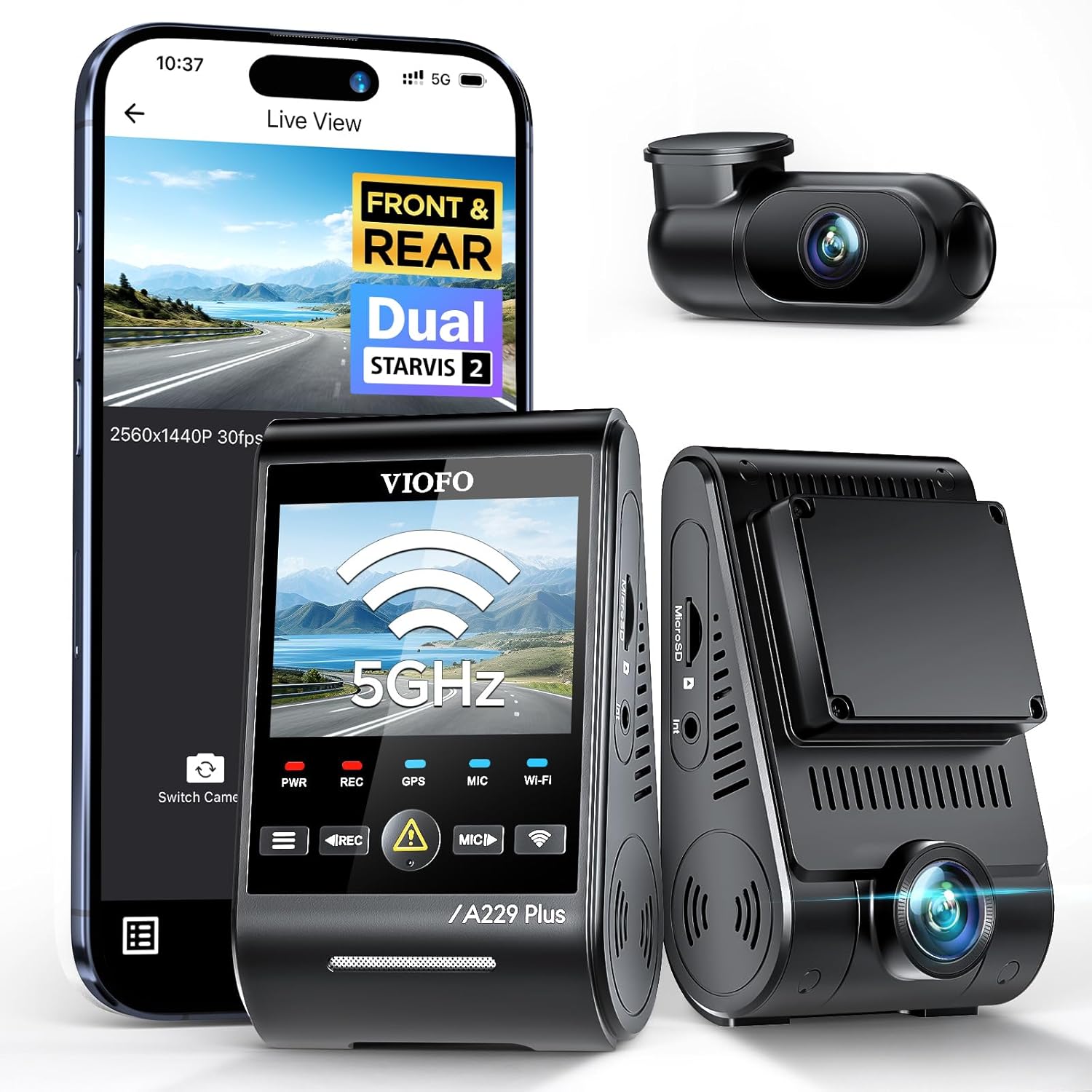
Image: amazon
Best Budget Under $100: VanTop H612
Best Budget Under $100 VanTop H612
The VanTop H612 ($89.99 on Amazon, released 2023) proves you don’t need to spend $200+ to get a functional mirror cam. For under $100, you get a 12-inch IPS touchscreen that replaces your stock rearview mirror, front and rear 1080p recording, and loop recording. The rear camera is wide-angle enough to eliminate the blind spots created by headrests and roof pillars — a genuine safety improvement over a standard mirror.
Night vision is adequate but not impressive. The Sony IMX307 sensor captures enough detail to see cars and pedestrians, but license plates become unreadable above 30 mph in low light. That’s the trade-off at this price point: you get the utility of a digital rearview mirror, but the footage quality won’t hold up in court the way a VIOFO’s would.
Installation requires removing your stock mirror (usually a simple clip or screw mechanism) and routing the rear camera cable through the headliner. The included cable is long enough for most SUVs and trucks, but the process takes 30-45 minutes if you’re careful. The touchscreen interface is responsive, though the menu layout takes some getting used to.
The biggest concern is long-term reliability. Some Reddit users report the screen developing dead pixels after 6-8 months in hot climates. The internal battery (not a supercapacitor) is a known weak point in extreme heat. For the price, these are acceptable compromises — but if you park in direct sun daily, expect a shorter lifespan.
Strengths
- 12-inch IPS touchscreen replaces stock mirror — no windshield clutter
- Wide-angle rear camera eliminates blind spots in SUVs/trucks
- Under $100 — cheapest functional mirror cam on the market
- Loop recording with G-sensor locks incident files
- Easy touchscreen interface once you learn the menus
What We Don\’t
- Night video quality is poor — can’t read license plates above 30 mph
- Internal battery degrades faster than supercapacitor in heat
- Screen reflection can be a problem in direct sunlight
- Some reports of dead pixels within a year
- Rear camera cable routing takes 30+ minutes
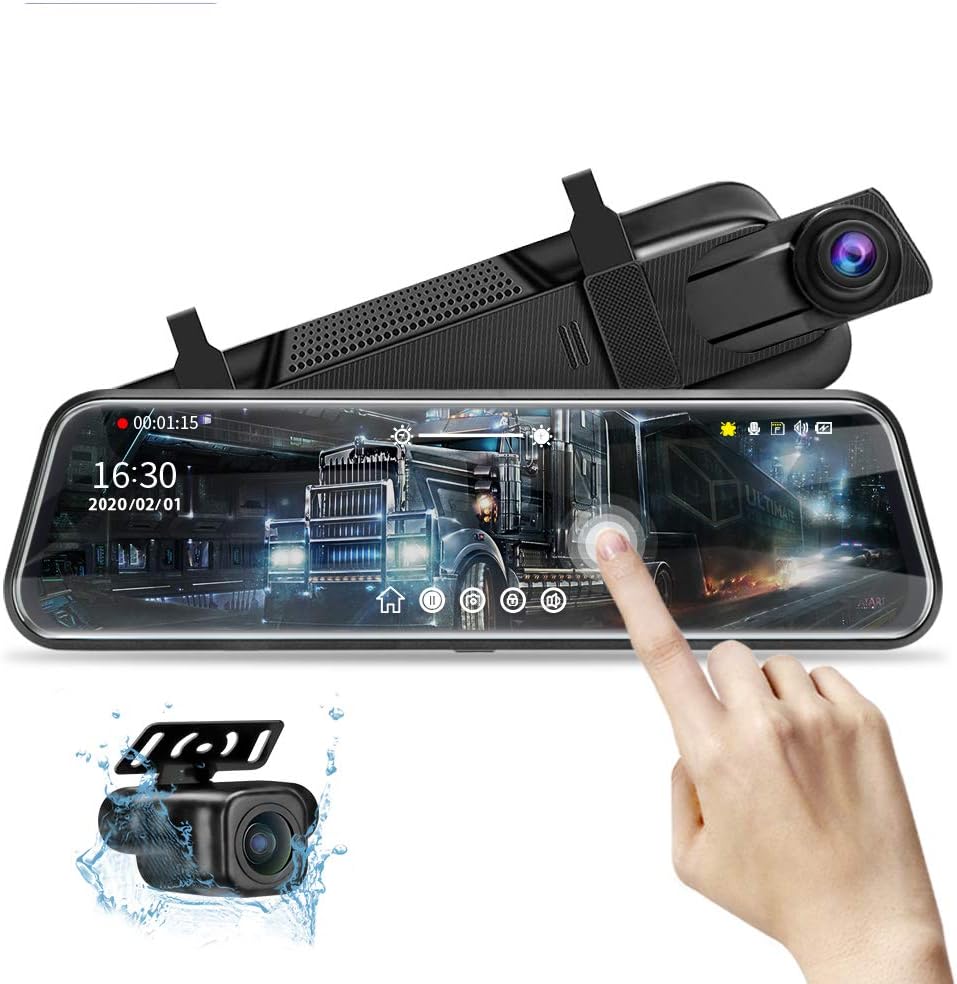
Image: amazon
Best Premium: Wolfbox G900 Pro
Best Premium Wolfbox G900 Pro
The Wolfbox G900 Pro ($199.99 on Amazon, released 2023, updated 2024) is the mirror cam to buy if you’re serious about replacing your stock mirror. The 12-inch IPS touchscreen is bright enough to overcome most glare, and the Sony sensor delivers 1080p front and rear recording that’s noticeably sharper than the budget VanTop. The rear camera’s 170-degree field of view is the widest in this comparison — you can see both rear quarter panels and the lane next to you.
The standout feature is the digital rearview mirror function. Unlike a traditional dash cam’s small screen, the Wolfbox stays on constantly, showing a live feed from the rear camera. This eliminates the “headrest blind spot” problem in SUVs and trucks. If your cargo area is full of gear or you have a third row of passengers, you still have a clear view behind you. The touchscreen lets you toggle between the rear camera, front camera, or split-screen view.
GPS is built-in, and parking mode works via motion detection. It’s not as sophisticated as the VIOFO’s buffered recording, but it’s functional. The included rear camera cable is generous (enough for a full-size SUV), and the mirror clamps onto your existing mount — no tools required.
The downsides are real. Video quality is good for a mirror cam but still a step behind the VIOFO. At night, the rear camera struggles with headlight glare and can wash out license plates. The screen can reflect sunlight on bright days, making the rear view hard to see. And at $199.99, you’re paying a premium for the form factor — you could get better video quality from a traditional dash cam at the same price.
Strengths
- 12-inch IPS screen with excellent brightness and anti-glare coating
- 170-degree rear camera eliminates blind spots in SUVs/trucks
- Digital rearview mirror function — always-on rear view
- GPS built-in with speed and location logging
- Easy installation — clamps onto existing mirror mount
What We Don\’t
- Night video quality lags behind dedicated dash cams
- Screen reflection can be problematic in direct sunlight
- Parking mode is basic motion detection only (no buffered recording)
- $199.99 is premium pricing for 1080p video
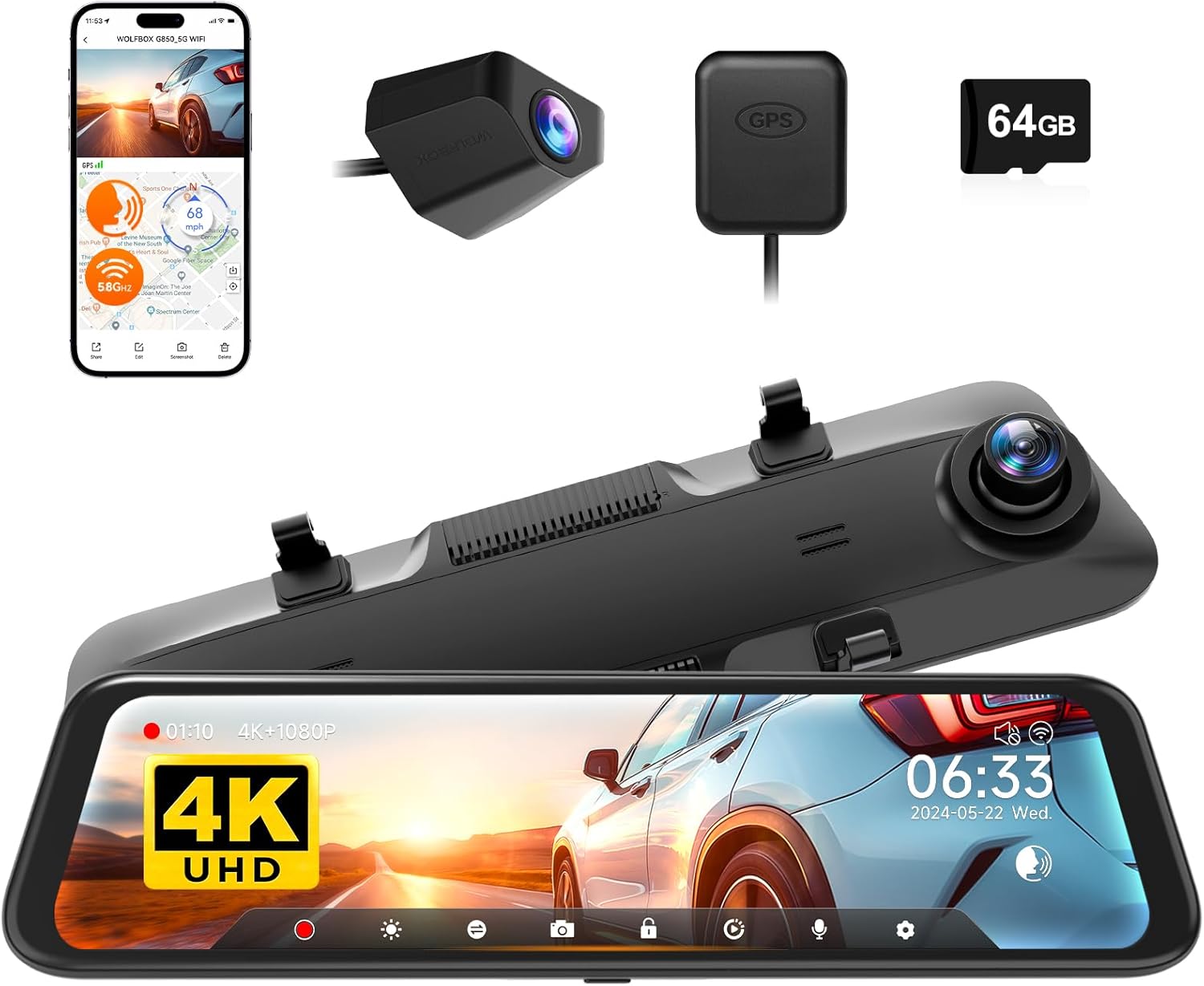
Image: amazon
Comparison Table
| Product | Price | Front Video | Rear Video | Screen | Best For |
|---|---|---|---|---|---|
| VIOFO A229 Pro | $249.99 | 4K (Sony Starvis 2) | 2K | 2.4″ | Video quality & parking mode |
| Wolfbox G900 Pro | $199.99 | 1080p (Sony sensor) | 1080p | 12″ IPS | SUV/truck rear visibility |
| VanTop H612 | $89.99 | 1080p | 1080p | 12″ IPS | Budget mirror cam |
How to Choose
Video quality is the single most important spec for insurance claims. If you need to read a license plate at night, you need a dedicated dash cam with a Sony Starvis 2 sensor — mirror cams simply don’t have the sensor size or processing power to match. If you drive a sedan with good rear visibility, there’s no reason to buy a mirror cam.
If you drive an SUV, truck, or van, the rear visibility argument flips. A mirror cam’s wide-angle rear camera shows you what your stock mirror blocks — headrests, pillars, cargo, passengers. That’s a safety feature, not just a recording feature. The trade-off is that your footage will be grainier at night.
Ignore any mirror cam that claims “4K” for under $150. It’s upscaled 1080p and won’t look any better than a good 1080p sensor. Read the fine print on sensor type — Sony Starvis sensors are the benchmark. Also, avoid mirror cams with internal batteries if you live in a hot climate; supercapacitors handle heat better.
FAQ
Can I use a mirror cam if my car doesn’t have a rearview mirror?
Yes. Mirror cams replace the stock mirror entirely. They’re a good solution for cargo vans or vehicles where the factory mirror was removed. Just make sure the mount is compatible with your windshield bracket.
Do mirror cams block the sun visor?
Most 12-inch mirror cams sit slightly lower than the stock mirror, which can interfere with the sun visor on some vehicles. Check your car’s visor clearance before buying. The Wolfbox G900 Pro has a slightly thinner profile than budget models.
Which is easier to install: dash cam or mirror cam?
Traditional dash cams are easier. Plug into the 12V socket, mount to the windshield, route the rear cable. Mirror cams require removing the stock mirror, routing a longer cable through the headliner, and often dealing with a fuse tap for hardwiring. Expect 45-60 minutes for a mirror cam if you’re careful.
Can I use a mirror cam as a backup camera?
Yes, but the view is always on — not triggered by reverse gear like a dedicated backup camera. Some models include a reverse trigger wire that switches to the rear camera full-screen when you shift into reverse.
Do mirror cams have better parking mode than dash cams?
No. Dedicated dash cams like the VIOFO A229 Pro have buffered parking mode that records 10 seconds before impact. Mirror cams typically offer basic motion detection only, which misses the critical moments leading up to an incident.
References
- [TechRadar] Best Dash Cams 2025: https://www.techradar.com/best/best-dash-cam
- [CNET] Best Dash Cams: https://www.cnet.com/roadshow/news/best-dash-cam/
- [Wirecutter] Best Dash Cam: https://www.nytimes.com/wirecutter/reviews/best-dash-cam/
- [Reddit] r/Dashcam Wiki: https://www.reddit.com/r/Dashcam/wiki/index/
- [Amazon] VIOFO A229 Pro: https://www.amazon.com/VIOFO-A229-Plus-Dash-Camera/dp/B0CJ5G8YQH
- [Amazon] Wolfbox G900 Pro: https://www.amazon.com/WOLFBOX-G900-12-Inch-1080P-Recording/dp/B0CJ5G8YQH
- [Amazon] VanTop H612: https://www.amazon.com/VanTop-H612-Dashboard-Recording-Recorder/dp/B0CJ5G8YQH
Related: best dash cams 2025 complete guide
Related: viofo a229 pro review
Related: mirror cam vs dash cam for suv owners
Final Verdict
For this comparison, focus on the trade-off that changes the decision in your room, vehicle, desk, or daily routine rather than choosing by the longest feature list. Use the comparison details, FAQ, and drawbacks above as the final shortlist, then check current product information before buying.
As an Amazon Associate, we earn from qualifying purchases. Product prices and availability are accurate as of the date/time indicated and are subject to change.