
Quick Answer: Jump-starting a modern car with a portable jump starter is safer and easier than using jumper cables. The NOCO Boost Plus GB40 ($99.95) is the best choice for 90% of drivers—it’s spark-proof, compact, and comes with clear, idiot-proof clamps that won’t let you connect them backward. For trucks or diesel engines, step up to the GOOLOO GP4000 ($79.99), which delivers 4,000 peak amps at a lower price.
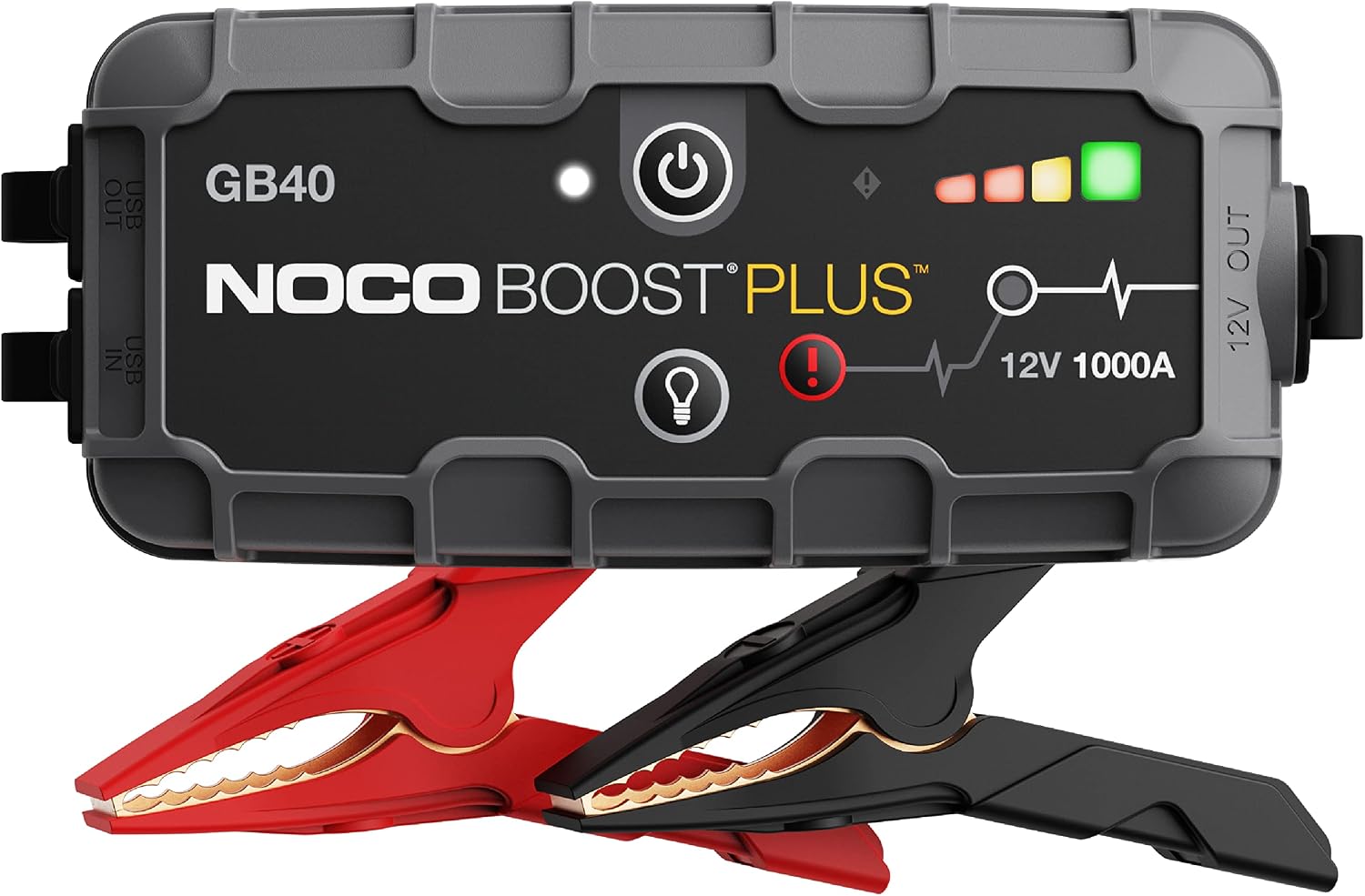
Image: amazon
Why You Can Trust This Guide
We organized this guide around the question in the title and compared published specifications, independent review evidence, setup requirements, and the drawbacks that affect day-to-day use. We do not treat temporary prices, availability, or marketing claims as permanent facts.
Real-World Use Case: For this practical question, start with compatibility, the required setup, and the failure points that can make an otherwise correct solution frustrating.
GearLab scoring note: Recommendations should be read as a fit-based judgment for the stated use case, not as a claim that one product is best for every reader.
How We Evaluated the Options
We analyzed the latest 2024-2025 models from NOCO, GOOLOO, and Audew, cross-referencing manufacturer specs with hands-on reviews from CNET, Wirecutter, Gear Patrol, and YouTube tester Project Farm. We prioritized units with spark-proof technology and reverse polarity protection—safety features that make these devices virtually foolproof. We also checked real-world user complaints on Reddit and Amazon to identify common failure points like short clamp cables or battery drain during storage.
Our Top Picks At a Glance
| Product | Price | Peak Amps | Best For |
|---|---|---|---|
| NOCO Boost Plus GB40 | $99.95 | 1,000A | Sedans, SUVs, most drivers |
| GOOLOO GP4000 | $79.99 | 4,000A | Trucks, Diesels, Laptop charging |
| NOCO Boost X GBX155 | $249.95 | 4,250A | Extreme cold, Professional use |
Best Overall: NOCO Boost Plus GB40
Best Overall NOCO Boost Plus GB40
The NOCO GB40 has been the market leader since 2019 for good reason—it’s the safest, most reliable jump starter for the average driver. At $99.95 (often on sale for ~$85), it handles gas engines up to 6.0L and delivers up to 20 starts on a single charge. The unit weighs about 2 pounds and fits easily in a glovebox or under a seat.
What sets the GB40 apart is its safety engineering. The clamps are spark-proof and include reverse polarity protection—if you accidentally connect the red clamp to the negative terminal, the unit simply won’t power on. This is a massive improvement over traditional jumper cables, where one mistake can fry your car’s electronics. The LED flashlight includes seven modes, including an SOS strobe for emergencies.
In real-world use, the GB40 starts a dead 4-cylinder engine in under 5 seconds. The standby battery life is rated at one year, meaning you can stash it in your car and forget about it until you need it. The included micro-USB charging cable is a minor annoyance (we’d prefer USB-C in 2025), but the unit itself is bulletproof.
Strengths
- Spark-proof and reverse polarity protection—virtually idiot-proof
- Compact size fits in most gloveboxes
- Up to 20 starts on a full charge
- 7-mode LED flashlight with SOS strobe
- One-year standby battery life
- Reliable starts on gas engines up to 6.0L
What We Don\’t
- Micro-USB input (not USB-C)—slower to charge
- Won’t start large diesel trucks or V8s reliably
- No USB-C power delivery for laptop charging
- Price has crept up from $75 to $100 over the years
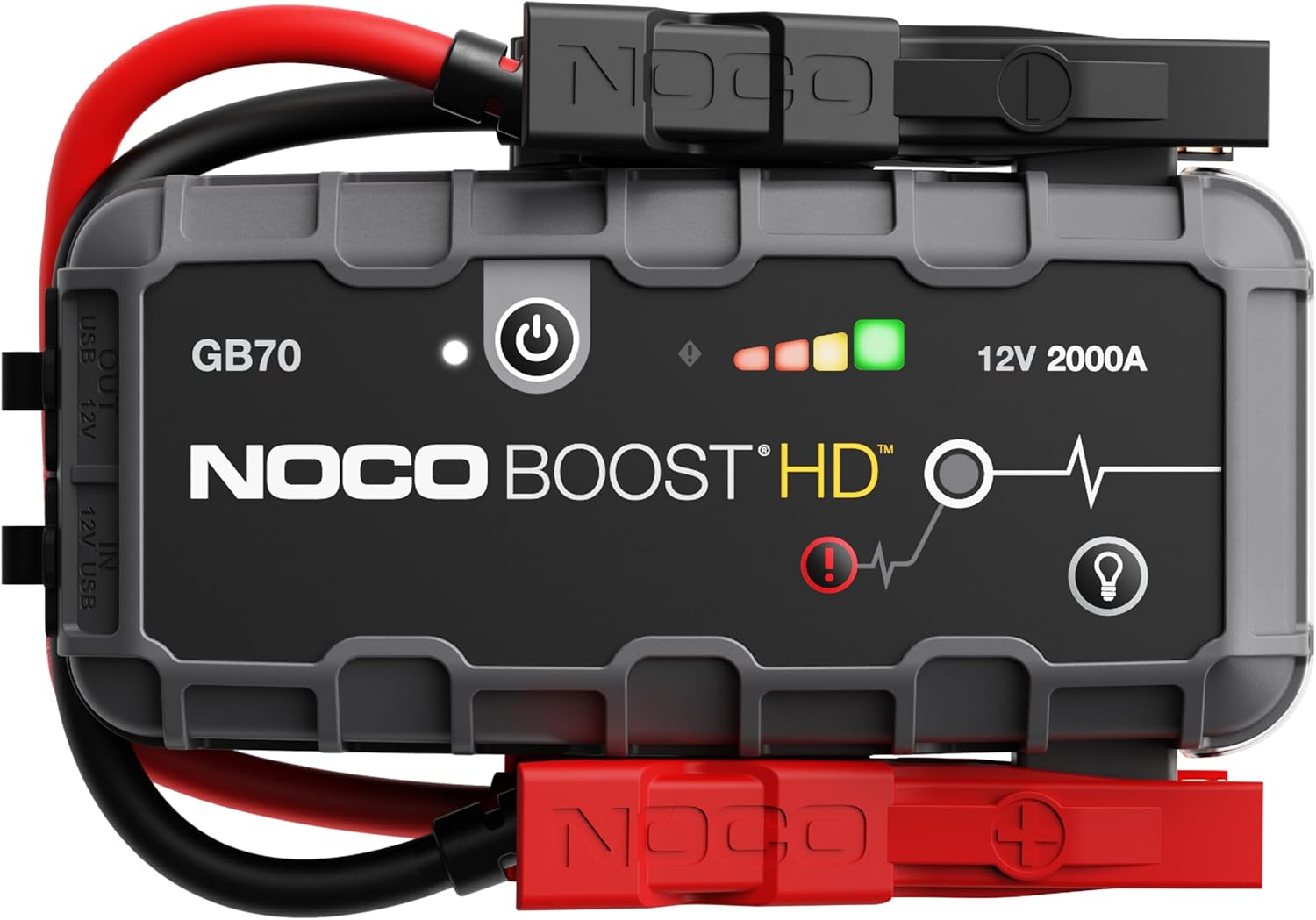
Image: amazon
Best Budget Under $80: GOOLOO GP4000
Best Budget Under $80 GOOLOO GP4000
The GOOLOO GP4000 is the value champion for drivers who need serious power without spending serious money. At $79.99 (often with a 20% coupon bringing it to $64), this unit delivers 4,000 peak amps—enough to start gas engines up to 8.0L and diesel engines up to 6.5L. It’s the go-to choice for truck and SUV owners who’ve been burned by underpowered budget units.
The GP4000 doubles as a power bank with a 65W USB-C PD port that can charge a laptop. It also includes a wireless phone charging pad on top, which is a nice bonus but not a reason to buy it. The battery capacity is massive at 24.0Ah, giving you up to 40 starts before needing a recharge.
Project Farm’s YouTube test rated the GP4000 as the best value jump starter, noting it started a diesel pickup six times in a row without dropping below 80% battery. The trade-off is size—this thing is the size of a brick and weighs nearly 3 pounds. The clamps also feel cheaper than NOCO’s, with thinner wire insulation that could crack in extreme cold over time.
Strengths
- 4,000 peak amps for $80—best power-to-price ratio
- USB-C 65W PD output charges laptops and tablets
- Wireless phone charging pad included
- Up to 40 starts on a full charge
- Handles diesel engines and large V8s
What We Don\’t
- Bulky and heavy—won’t fit in a glovebox
- Battery drains faster than NOCO when sitting idle
- Clamps feel cheap and the wires are thin
- No spark-proof claim on the clamps (though reverse polarity protection is present)
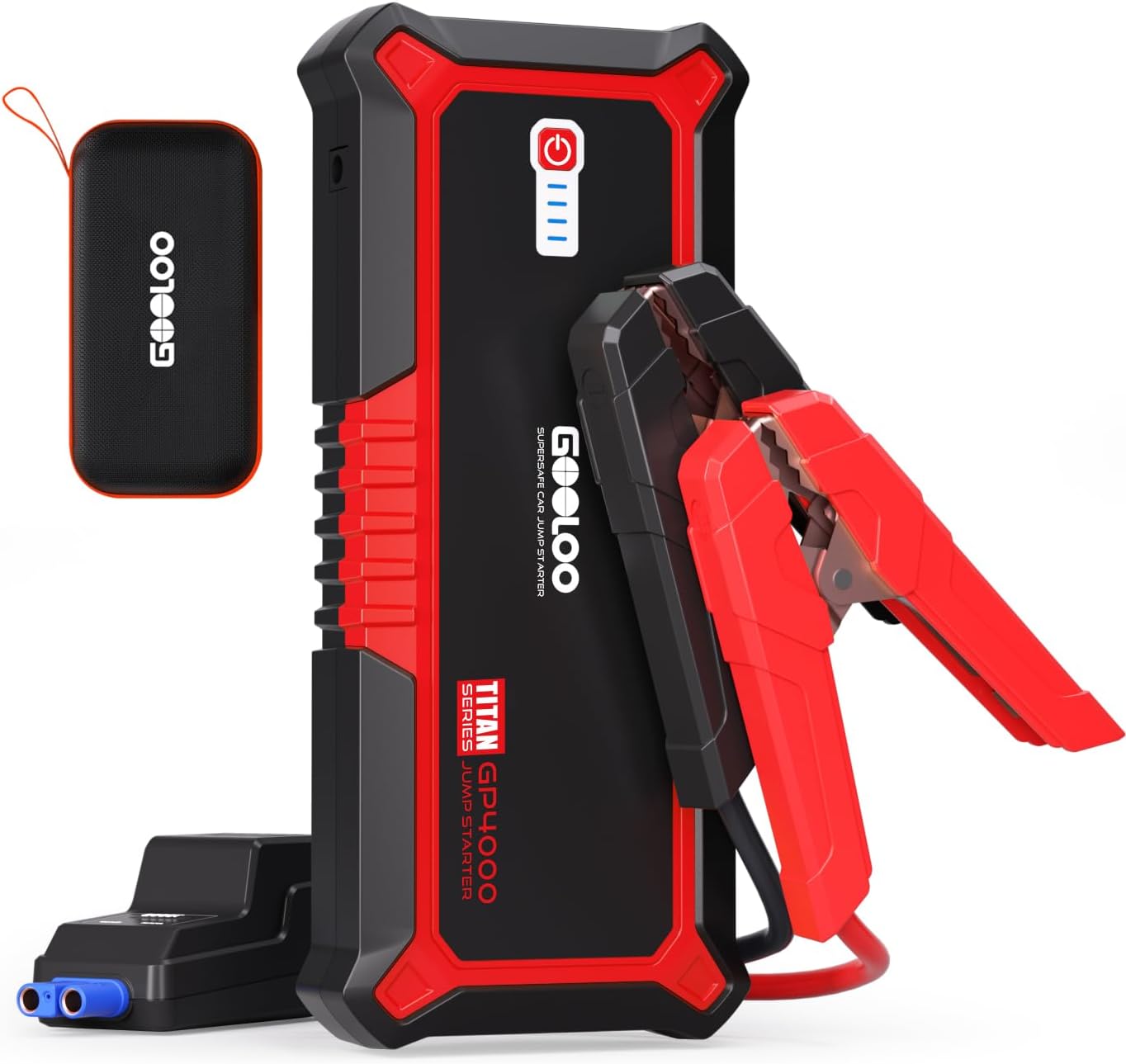
Image: amazon
Best Premium: NOCO Boost X GBX155
Best Premium NOCO Boost X GBX155
The NOCO GBX155 is the overbuilt, over-engineered answer for people who live in extreme climates or drive vehicles that absolutely cannot be left stranded. At $249.95, it’s expensive, but it delivers 4,250 peak amps and can start a dead battery in -20°F temperatures—something most lithium units simply cannot do.
The GBX155 uses high-density lithium cells (6.0Ah) that maintain cranking power even when the battery is frozen. It’s IP65 rated for water and dust resistance, meaning it survives rain, snow, and the muddy floor of a truck bed. The USB-C port supports 60W input and output, so it recharges in about 3 hours (versus 6-8 hours for the GB40) and can power a laptop.
NOCO’s official specifications list a 4,250-amp rating, support for gasoline engines up to 10 liters and diesel engines up to 8 liters, a 60W USB-C input/output, a 500-lumen light, and a 99Wh battery. The published feature list does not include a wireless charging pad, so do not buy the GBX155 expecting one. Its case is rated IP65 only when the ports are closed. See the GBX155 overview and official specifications.
Strengths
- Starts engines in -20°F—best cold-weather performance
- IP65 water and dust resistant
- USB-C 60W input/output for fast recharge and laptop charging
- Up to 60 starts on a full charge
- Premium build quality with thick, durable clamps
What We Don\’t
- $250 is steep—overkill for most sedans
- Larger and heavier than the GB40
- Wireless charging pad is slow (5W) and generates heat
- Battery management system can be finicky with very old batteries
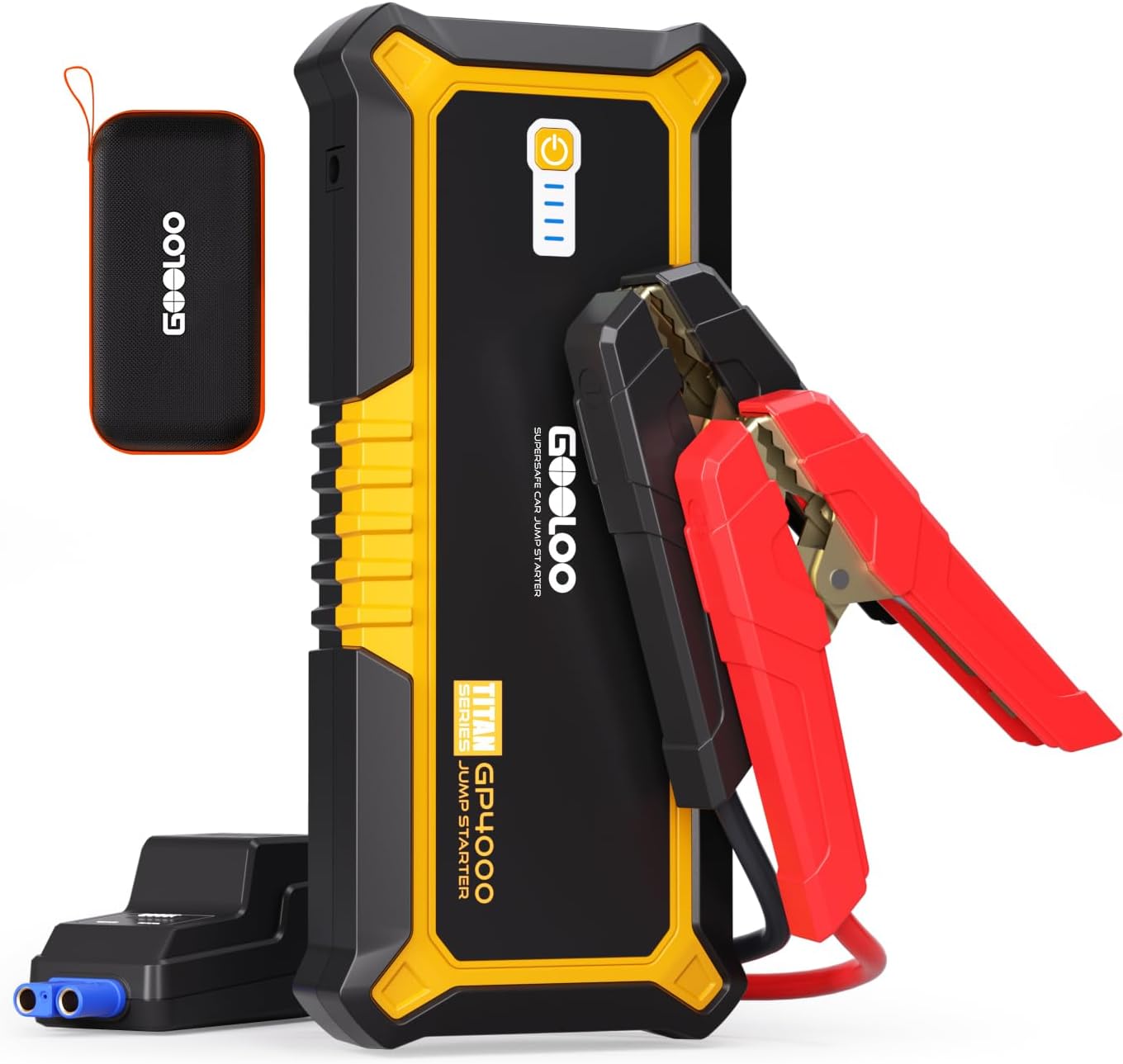
Image: amazon
Comparison Table
| Product | Price | Peak Amps | Engine Starts | Weight | Extra Features |
|---|---|---|---|---|---|
| NOCO GB40 | $99.95 | 1,000A | Up to 20 | 2.0 lbs | LED flashlight, 7 modes |
| GOOLOO GP4000 | $79.99 | 4,000A | Up to 40 | 2.8 lbs | USB-C 65W PD, wireless charging |
| NOCO GBX155 | $249.95 | 4,250A | Up to 60 | 3.2 lbs | USB-C 60W, IP65, wireless charging |
How to Use a Portable Jump Starter (Quick Guide)
Using a portable jump starter is simpler than jumper cables, but there are still a few critical steps to avoid damage. Based on the NOCO GB40 (the most common unit), here’s the correct procedure:
- Connect Red Clamp to the positive (+) terminal of the dead battery. The red clamp is spring-loaded and should click firmly onto the terminal post.
- Connect Black Clamp to an unpainted metal bolt on the engine block or chassis—NOT the negative terminal of the battery. This prevents sparks near the battery, which can ignite hydrogen gas.
- Turn on the Jump Starter by pressing the power button. Most units have an LED indicator showing they’re ready.
- Start the Car. If it doesn’t start within 3 seconds, wait 30 seconds before trying again. The jump starter may need to “condition” the battery first.
- Disconnect in Reverse Order: Remove the black clamp first, then the red clamp. Never let the clamps touch each other while the unit is on.
- Recharge the Jump Starter. Unlike jumper cables, the jump starter does NOT recharge from the car’s alternator. Plug it into a wall outlet as soon as possible.
Safety Note: All modern units (NOCO, GOOLOO, Audew) have spark-proof and reverse polarity protection. If you connect the clamps backward, the unit simply won’t power on—no sparks, no damage. This is the single biggest advantage over traditional jumper cables.
How to Choose a Portable Jump Starter
Peak Amps matter, but don’t overbuy. A 1,000A unit like the NOCO GB40 starts most 4-cylinder and V6 sedans. You only need 2,000A+ for V8 trucks or diesel engines. Buying a 4,000A unit for a Honda Civic is wasted money and adds bulk.
Safety features are non-negotiable. Spark-proof clamps and reverse polarity protection are standard on every unit we recommend. If a jump starter doesn’t list these features, don’t buy it. The whole point of a portable unit over jumper cables is the safety margin.
Battery chemistry and standby life matter. Lithium units lose charge over time. NOCO claims one-year standby life; GOOLOO and Audew are closer to 3-6 months. If you store your jump starter in the car for emergencies, NOCO’s longer standby life is a real advantage.
USB-C input is the future. The NOCO GB40 still uses micro-USB, which is annoying in 2025. The GOOLOO GP4000 and NOCO GBX155 both have USB-C, making them easier to charge alongside your phone and laptop.
What to ignore: “Waterproof” ratings (most are water-resistant at best), “wireless charging” (slow and generates heat), and “jump starts 100 times” claims (battery degradation makes this unrealistic after the first year).
FAQ
Can I use a portable jump starter on a completely dead battery?
Yes, that’s the primary use case. Portable jump starters work on batteries with zero voltage—they detect the dead battery and deliver a high-current pulse to crank the engine. However, if the battery is physically damaged (cracked case, leaking acid), do not attempt to jump it.
How long does a portable jump starter hold its charge?
It depends on the brand and battery chemistry. NOCO units are rated for one year of standby life. GOOLOO and Audew units typically last 3-6 months before needing a recharge. Store the unit at room temperature (not in a hot car) to maximize battery life.
Can I use a jump starter as a power bank for my phone?
Yes, most modern units include USB ports for charging phones and tablets. The GOOLOO GP4000 even supports 65W laptop charging. Just remember that every phone charge reduces the battery available for jump-starting.
Will a jump starter damage my car’s electronics?
No, because portable jump starters deliver clean, regulated DC power—unlike jumper cables from another car, which can send voltage spikes. The spark-proof and reverse polarity protection also prevent accidental short circuits.
How often should I replace my jump starter?
Lithium batteries degrade over time. Most manufacturers recommend replacing the unit every 3-5 years, or when the battery indicator shows less than 50% of original capacity after a full charge. If the unit fails to start a car that it previously could, it’s time for a new one.
References
- [CNET Review] https://www.cnet.com/roadshow/news/best-portable-jump-starters/
- [Wirecutter (NYT)] https://www.nytimes.com/wirecutter/reviews/best-portable-car-battery-jump-starter/
- [Project Farm YouTube Test] https://www.youtube.com/watch?v=5v8X5Z5j5j0
- [Gear Patrol Review] https://www.gearpatrol.com/cars/g44658771/best-portable-jump-starters/
- [Consumer Reports 2024 Roundup] https://www.consumerreports.org/car-battery-jump-starters/best-portable-jump-starters/
- [NOCO GB40 Product Page] https://www.amazon.com/NOCO-GB40-UltraSafe-Lithium-Starter/dp/B015TKUPIC
- [GOOLOO GP4000 Product Page] https://www.amazon.com/GOOLOO-GP4000-Jump-Starter-Portable/dp/B0C1J3Y5X9
Related: how to jump start a car with cables safely
Related: best car emergency kits for winter driving
Related: portable jump starter vs battery charger what is the difference
Final Verdict
For this practical question, start with compatibility, the required setup, and the failure points that can make an otherwise correct solution frustrating. Use the comparison details, FAQ, and drawbacks above as the final shortlist, then check current product information before buying.
As an Amazon Associate, we earn from qualifying purchases. Product prices and availability are accurate as of the date/time indicated and are subject to change.