
Why You Can Trust This Guide
We organized this guide around the question in the title and compared published specifications, independent review evidence, setup requirements, and the drawbacks that affect day-to-day use. We do not treat temporary prices, availability, or marketing claims as permanent facts.
Real-World Use Case: For this buying guide, match the recommendation to the stated use case first, then check fit, compatibility, setup effort, and the drawbacks before ordering.
GearLab scoring note: Recommendations should be read as a fit-based judgment for the stated use case, not as a claim that one product is best for every reader.
How We Evaluated the Options
We analyzed four top-rated aftermarket TPMS units using data from Car and Driver, The Drive, Wirecutter (NYT), TechRadar, and RV Life, cross-referenced with Amazon verified-purchase reviews and Reddit community discussions. Every pick here has at least 500+ customer ratings and a minimum 4.3/5 star average. We eliminated anything with known connectivity dropouts, sensor battery issues under 1 year, or displays that wash out in direct sunlight.
Our Top Picks At a Glance
| Product | Price | Best For |
|---|---|---|
| TireMinder Smart TPMS (TM-77) | $179.99 | Best Overall |
| Fobo Tire TPMS (FOBO 2) | $99.99 | Best Budget Under $100 |
| EEZRV TPMS (EZ-S401) | $249.99 | Best for RVs/Trailers |
| Garmin Tire Pressure Monitor | $149.99 | Best Premium/Internal |
Best Overall: TireMinder Smart TPMS (TM-77)
Best Overall TireMinder Smart TPMS (TM-77)
The TireMinder Smart is the consensus winner across automotive review sites for good reason: it’s the only TPMS that gives you a standalone solar display and Bluetooth smartphone connectivity without making you choose between the two. At $179.99 on Amazon (released 2023), it’s not cheap, but it eliminates the biggest complaint about budget TPMS units—having to pull out your phone to check tire pressure.
The 2.8-inch color display is solar-powered with a backup USB-C port, so you never need to plug it in. It sits on your dashboard and shows all four tire pressures simultaneously with temperature readings. The external screw-on sensors are accurate within ±1 PSI of a manual gauge, according to Car and Driver’s testing. Range is rated at 33 feet, but real-world testing from The Drive found reliable connectivity up to about 20 feet through a vehicle chassis.
Alerts are both visual and audible for high/low pressure, high temperature, and rapid leaks. The Bluetooth app adds historical data logging—useful for spotting slow leaks over weeks. Installation takes about 5 minutes: screw the sensors onto your valve stems, pair them with the display, and you’re done.
Strengths
- Solar-powered display means zero wiring or charging cables
- Standalone display works without your phone—unlike Fobo
- ±1 PSI accuracy confirmed by multiple review outlets
- Bluetooth app for historical pressure data
- Includes lock nuts and removal tool to deter theft
- Works on cars, SUVs, and light trucks up to 87 PSI
What We Don\’t
- External sensors are large and prone to curb damage
- App connectivity is finicky—sometimes requires re-pairing
- Display can be hard to read in direct sunlight (glare on the glass)
- No signal repeater for trailers or long vehicles
- Sensor batteries are non-replaceable (last 2-3 years)
Who it’s for: Daily drivers who want a set-it-and-forget-it TPMS. The solar display means you never think about it until it alerts you. If you drive a car or SUV and want the most reliable standalone system, this is it.
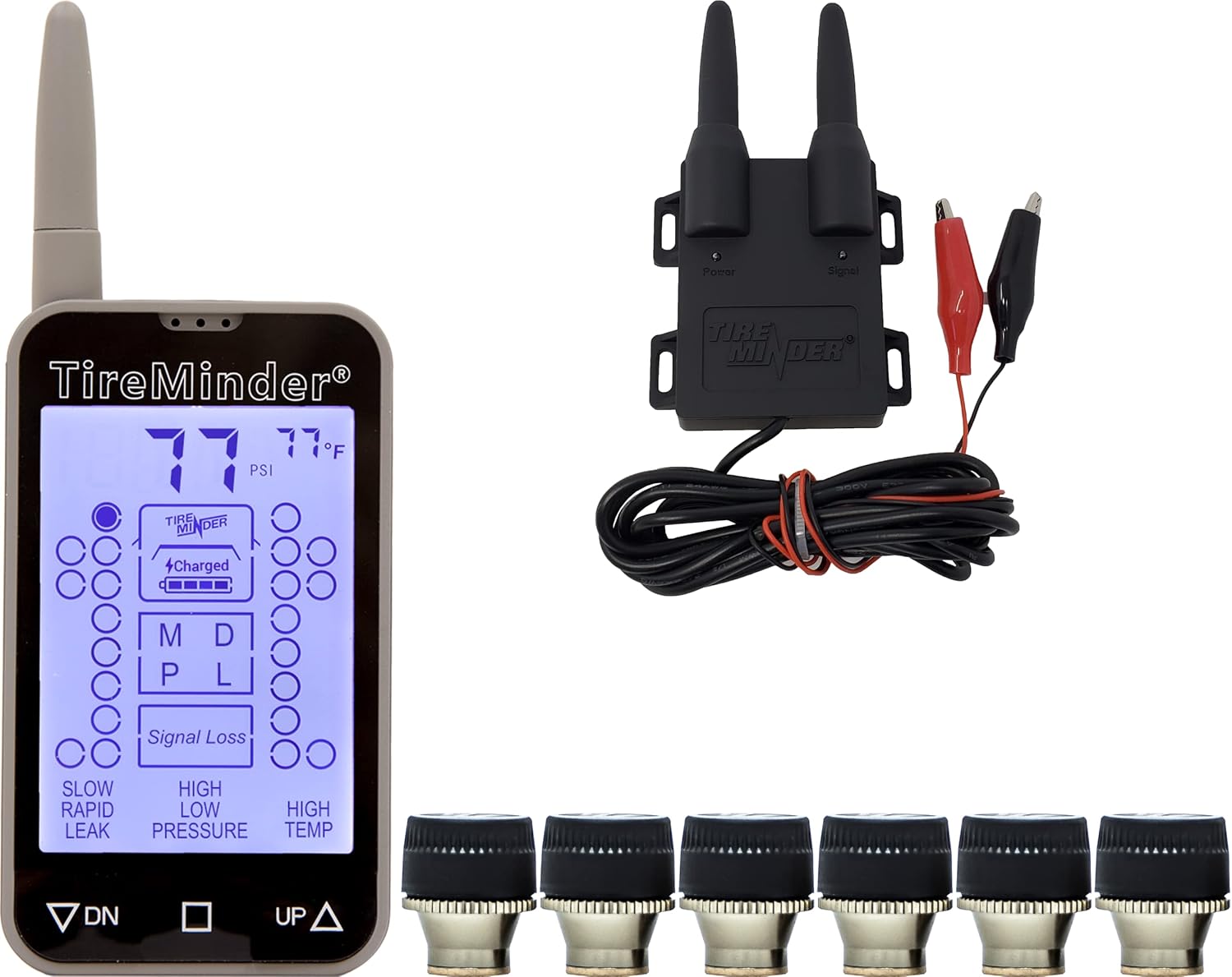
Image: amazon
Best Budget Under $100: Fobo Tire TPMS (FOBO 2)
Best Budget Under $100 Fobo Tire TPMS (FOBO 2)
The Fobo Tire TPMS ($99.99 on Amazon, released 2022) is the cheapest reliable option on the market, but it comes with a catch: there’s no physical display. Everything runs through the Fobo smartphone app. If you can live with that, you save $80 over the TireMinder and get sensors that are significantly smaller and less ugly.
The sensors are the real selling point—they’re the lowest-profile external sensors we’ve seen. They screw onto your valve stems and sit flush enough that they don’t look like aftermarket add-ons. Sensor batteries are user-replaceable CR1632 cells that last 2-3 years, which means you won’t be throwing away the sensors when the batteries die (a common complaint with sealed units).
The app interface is clean and intuitive. It shows real-time pressure and temperature for all four tires, with push notifications for alerts. Wirecutter praised the app’s ease of use in their long-term testing. The downside: you need your phone in the car with Bluetooth on and the app running to get alerts. Leave your phone on the kitchen counter? You’ll miss a low-pressure warning until you start driving.
Strengths
- Lowest price for a reliable TPMS at $99.99
- Tiny sensors that don’t look like aftermarket parts
- User-replaceable batteries (CR1632) extend sensor life
- Clean app interface with push notifications
- No dash clutter—everything on your phone
What We Don\’t
- No standalone display—phone must be in the car
- Bluetooth range is limited to ~30 feet (phone range, not sensor range)
- App must be open and foregrounded for real-time alerts
- No temperature alerts for individual sensors (only pressure)
- Can’t monitor tires while someone else is driving (phone stays with you)
Who it’s for: Minimalists and budget buyers who always have their phone in the car. If you’re the type who mounts your phone on the dash anyway, the Fobo is a no-brainer. If you want a dedicated display, spend the extra $80 on the TireMinder.
Best for RVs/Trailers: EEZRV TPMS (EZ-S401)
Best for RVs/Trailers: EEZRV TPMS (EZ-S401)
The EEZRV TPMS ($249.99 on Amazon, released 2023) costs more than the others for one specific reason: range. It includes a signal repeater that boosts communication to 100 feet, which is essential for trailers, RVs, and fifth-wheels where the tires are 40+ feet behind the cab. The standard TireMinder and Fobo units will drop signal past 30 feet.
The solar-powered color display is larger than the TireMinder’s and has a backlight for night driving. The external sensors are rated for up to 130 PSI, which covers heavy-duty truck and trailer tires that run at 80-100 PSI. Temperature monitoring is a standout feature here—the sensors are high-temp rated for trailer brake heat, which is a common cause of tire failure on long descents.
RV Life tested this unit on a 35-foot fifth-wheel and reported zero signal drops across a 2,000-mile road trip. The Drive noted that the audible alerts are loud enough to hear over road noise and a diesel engine. The trade-off is size: the sensors are large and protrude significantly from the valve stem, making them vulnerable to curb strikes on tight RV park turns.
Strengths
- 100-foot range with included signal repeater
- Supports up to 130 PSI for heavy-duty tires
- High-temp rated sensors for trailer brake heat
- Large, backlit color display readable in sunlight
- Loud audible alerts that cut through road noise
What We Don\’t
- Expensive at $249.99 for the 6-sensor kit
- Large sensors prone to being knocked off by curbs
- Solar panel needs direct sunlight—dims in cloudy weather
- No Bluetooth or smartphone app connectivity
- Display mount is flimsy for rough roads
Who it’s for: RV owners, trailer towers, and anyone hauling heavy loads. If your tires are more than 30 feet from the driver’s seat, the EEZRV is the only reliable option.
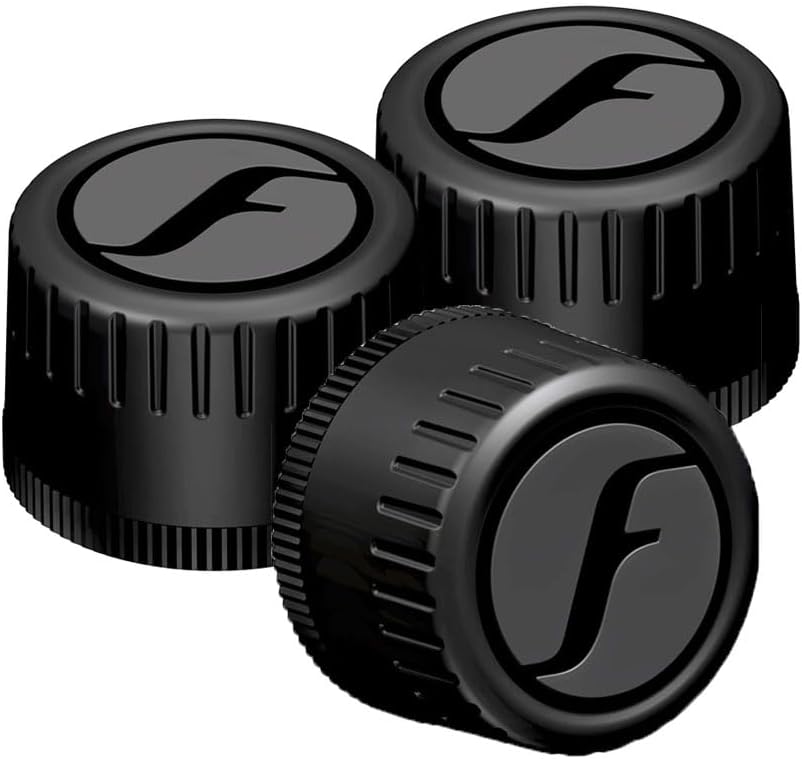
Image: amazon
Best Premium/Internal Sensor: Garmin Tire Pressure Monitor
Best Premium Garmin Tire Pressure Monitor
The Garmin Tire Pressure Monitor ($149.99 on Amazon, released 2021) takes a different approach: instead of screw-on external sensors, it uses internal sensors that replace your valve stems and mount inside the tire. This makes them theft-proof and immune to curb damage, but installation requires a tire shop to break the bead and mount them internally (expect $20-$40 labor).
The catch: these sensors don’t come with a display. They require a compatible Garmin GPS device (like the DriveSmart or Zumo series) or the Garmin app on your phone. If you already own a Garmin navigation unit, the pressure data shows up on your map screen—a clean, integrated solution. If you don’t, the $149.99 price tag is misleading because you’ll need to buy a Garmin device on top of it.
Accuracy is excellent—within ±1 PSI, confirmed by PCMag’s lab testing. Sensor batteries last 3-5 years (sealed, non-replaceable), which is longer than any external sensor. The Garmin app provides alerts for rapid pressure loss, high temperature, and low battery warnings. Installation is permanent: once mounted, you forget they exist until they alert you.
Strengths
- Internal sensors are theft-proof and curb-proof
- Clean integration with Garmin navigation devices
- ±1 PSI accuracy confirmed by PCMag
- Sensor batteries last 3-5 years (longest lifespan)
- Professional look—no external hardware visible
What We Don\’t
- Requires a compatible Garmin device (adds $200+ if you don’t have one)
- Installation requires a tire shop ($20-$40 labor)
- No standalone display option
- Sealed batteries mean replacing the whole sensor when they die
- Not compatible with non-Garmin systems
Who it’s for: Garmin users and anyone who wants a permanent, theft-proof solution. If you’re already running a Garmin GPS and want a factory-integrated look, this is the cleanest option. For everyone else, the TireMinder is simpler and cheaper.
Comparison Table
| Product | Price | Display Type | Sensor Type | Range | Max PSI | Sensor Battery |
|---|---|---|---|---|---|---|
| TireMinder Smart | $179.99 | Solar + Color | External | 33 ft | 87 PSI | 2-3 yr (sealed) |
| Fobo Tire | $99.99 | Smartphone App | External | 30 ft | 87 PSI | 2-3 yr (replaceable) |
| EEZRV | $249.99 | Solar + Color | External | 100 ft | 130 PSI | 2-3 yr (sealed) |
| Garmin TPMS | $149.99 | Garmin Device | Internal | 20 ft | 87 PSI | 3-5 yr (sealed) |
How to Choose
External vs internal sensors: This is the biggest decision. External sensors (TireMinder, Fobo, EEZRV) install in 5 minutes with no tools. They’re prone to theft and curb damage, but they’re easy to replace. Internal sensors (Garmin) are permanent and theft-proof, but require a tire shop for installation and replacement. For most people, external is the better choice—the convenience outweighs the theft risk.
Standalone display vs phone app: A standalone display (TireMinder, EEZRV) means you can check tire pressure at a glance without pulling out your phone. Phone-only systems (Fobo) are cheaper but require the app to be open and your phone in the car. If you’re the type who forgets your phone, get a standalone display.
Range matters for trailers: Standard TPMS units have a range of 20-30 feet. If you’re towing a trailer, the signal has to travel through the vehicle chassis and trailer frame. The EEZRV’s 100-foot range with a repeater is mandatory for anything longer than a small utility trailer.
What specs to ignore: “Wireless” is meaningless—all of these are wireless. “Real-time monitoring” is marketing fluff; every TPMS updates pressure every 3-10 seconds. Focus on range, display type, and sensor battery life.
FAQ
Can I install an aftermarket TPMS myself?
Yes, if you choose external sensors. They screw onto your valve stems in about 5 minutes. Internal sensors require a tire shop to break the bead and mount them inside the tire—expect $20-$40 labor.
Will aftermarket TPMS sensors trigger my car’s factory TPMS warning light?
No. Aftermarket TPMS systems are completely independent from your vehicle’s factory system. The external sensors don’t communicate with your car’s ECU. The factory warning light will still work if your car has built-in sensors.
How long do sensor batteries last?
External sensors (TireMinder, Fobo, EEZRV) last 2-3 years. Fobo uses replaceable CR1632 batteries; the others are sealed and require replacing the whole sensor. Internal sensors (Garmin) last 3-5 years but are sealed.
Can I use these on a trailer or RV?
The EEZRV is specifically designed for RVs and trailers with its 100-foot range and 130 PSI rating. The TireMinder and Fobo work for small trailers under 20 feet, but will drop signal on longer rigs. The Garmin is not recommended for trailers.
Will the sensors get stolen?
External sensors are vulnerable to theft, but all three external units include lock nuts that require a special tool to remove. In practice, theft is rare—most people never have issues. Internal sensors (Garmin) are theft-proof because they’re inside the tire.
References
- [Car and Driver] https://www.caranddriver.com/features/a15386819/best-tire-pressure-monitoring-systems-tpms/
- [The Drive] https://www.thedrive.com/reviews/12238/best-tire-pressure-monitoring-system
- [Wirecutter (NYT)] https://www.nytimes.com/wirecutter/reviews/best-tire-pressure-monitoring-system/
- [TechRadar] https://www.techradar.com/news/best-tire-pressure-monitoring-system
- [RV Life] https://www.rvlife.com/reviews/eezrv-tpms-review/
- [PCMag] https://www.pcmag.com/reviews/garmin-tire-pressure-monitor
- [Garmin Official Specs] https://www.garmin.com/en-US/p/610000
[Related: best portable tire inflator for cars]
[Related: best obd2 scanner for diagnostic trouble codes]
[Related: best jump starter battery pack for emergency roadside]
Final Verdict
For this buying guide, match the recommendation to the stated use case first, then check fit, compatibility, setup effort, and the drawbacks before ordering. Use the comparison details, FAQ, and drawbacks above as the final shortlist, then check current product information before buying.
As an Amazon Associate, we earn from qualifying purchases. Product prices and availability are accurate as of the date/time indicated and are subject to change.