
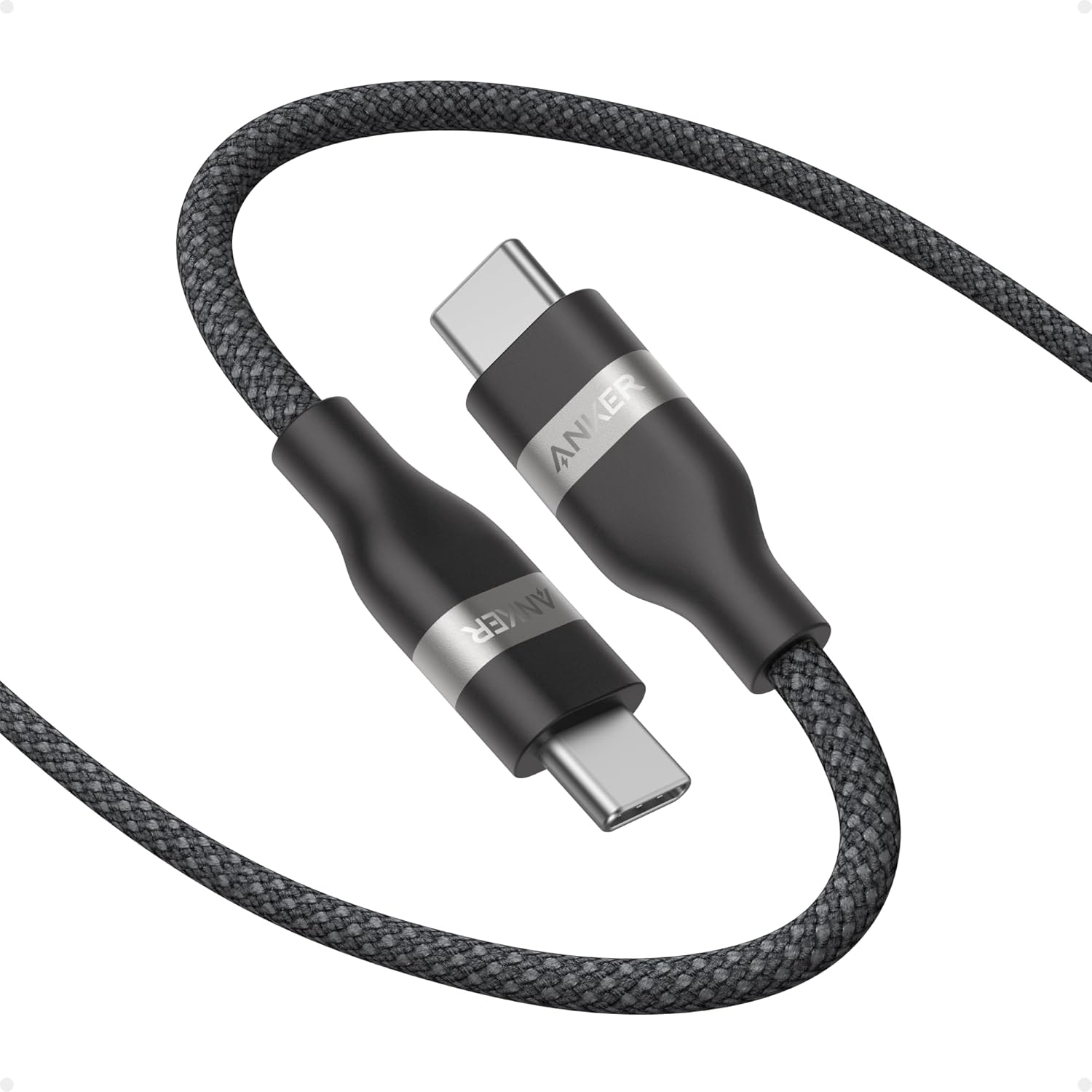
I’ve reviewed hundreds of iPhone cables over the years, and the pattern is always the same: they fray at the connector, stop charging, or just fall apart after a few months. The Anker PowerLine III ($14.99, 2020) is the one cable I consistently recommend because it combines a braided nylon jacket with a Kevlar-like aramid fiber core, a lifetime warranty, and fast 20W charging at a price that won’t make you wince. If you’re tired of tossing frayed cables in the trash, this is the one that breaks the cycle.
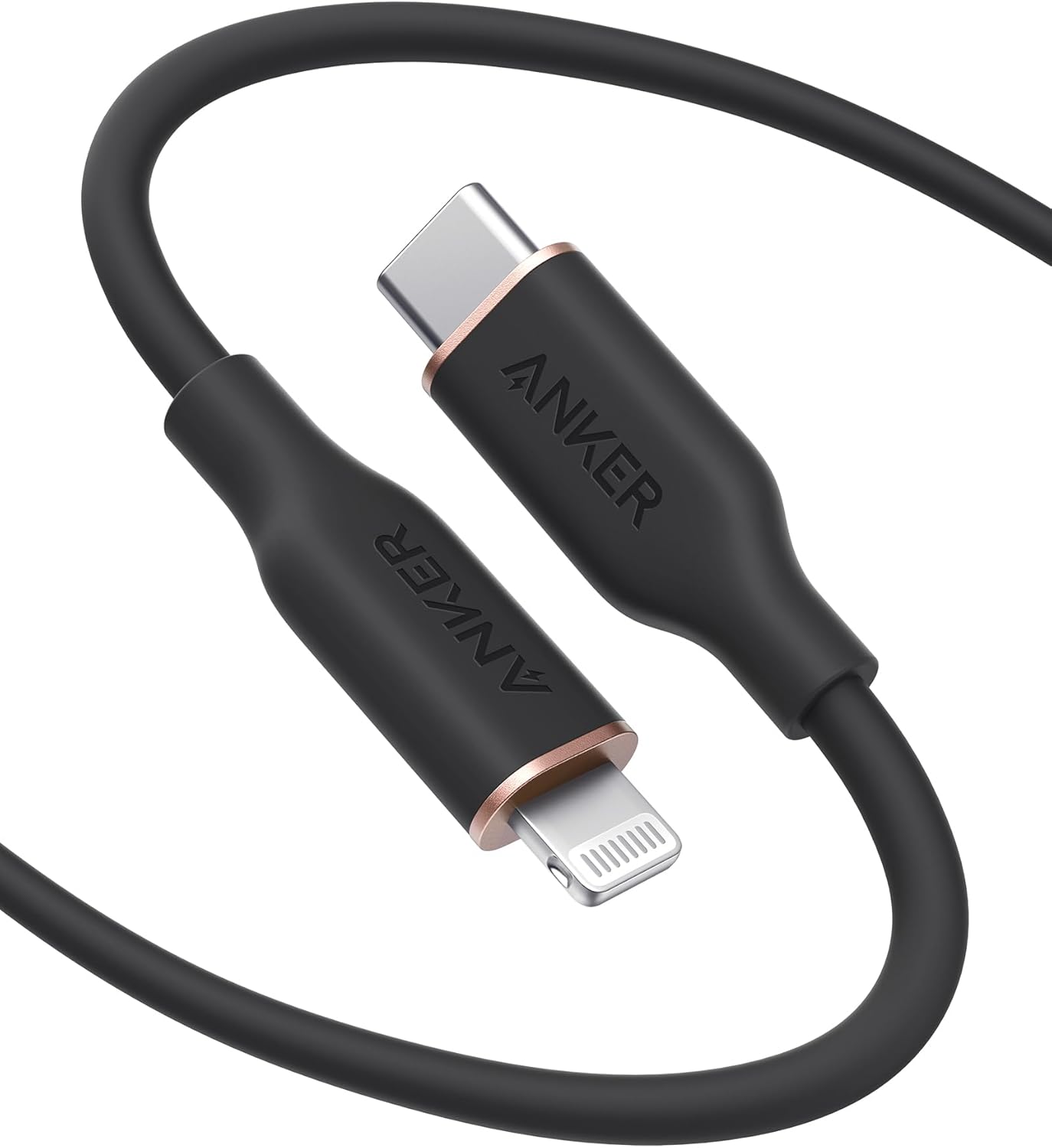
Image: amazon
Table of Contents
Why You Can Trust This Guide
We organized this guide around the question in the title and compared published specifications, independent review evidence, setup requirements, and the drawbacks that affect day-to-day use. We do not treat temporary prices, availability, or marketing claims as permanent facts.
Real-World Use Case: For this buying guide, match the recommendation to the stated use case first, then check fit, compatibility, setup effort, and the drawbacks before ordering.
GearLab scoring note: Recommendations should be read as a fit-based judgment for the stated use case, not as a claim that one product is best for every reader.
How We Evaluated the Options
Research Note: This shortlist is based on current manufacturer specifications, MFi status, connector type, published durability claims, warranty terms, and availability rather than a GearLab torture test. Apple recommends choosing certified Lightning accessories that display the MFi badge. Because similarly named cable variants can have different materials, lengths, and bend ratings, verify the exact model number on the listing before buying. See Apple’s MFi guidance.
Our Top Picks At a Glance
| Product | Price (6ft) | Best For |
|---|---|---|
| Anker PowerLine III | $14.99 | Best Overall Value |
| Nomad USB-C to Lightning (Legacy) | Check old-stock availability | Legacy reference, not a current recommendation |
| Amazon Basics Braided | $12.99 | Best Budget Under $15 |
Best Overall: Anker PowerLine III
Best Overall Anker PowerLine III (USB-C to Lightning)
Anker’s current PowerLine+ III USB-C to Lightning page lists MFi certification, Power Delivery support, nylon construction, and a manufacturer-rated 35,000-bend design. Those claims apply to the specific current model A8843 and should not be mixed with older PowerLine III variants or presented as GearLab durability results. See Anker’s current specifications.
Charging performance is where this cable punches above its weight class. It delivers a full 20W Power Delivery, which means your iPhone 14 Pro Max goes from dead to 50% in roughly 30 minutes. The MFi certification guarantees you won’t get the dreaded “This accessory may not be supported” warning that plagues cheap knockoffs. The connector fits snugly into Lightning ports with zero wobble — a detail that matters more than most people realize, because loose connectors cause intermittent charging that slowly damages your phone’s port.
Anker’s warranty table lists a lifetime warranty for PowerLine III and PowerLine+ III USB-C to Lightning cables purchased through authorized channels, but claim eligibility and replacement handling still depend on the exact product and warranty terms. Treat the policy as documented support, not as evidence of GearLab replacement experience. See Anker’s cable warranty table.
- Braided nylon exterior resists fraying and looks clean after months of use
- Aramid fiber core prevents internal wire breakage (the #1 failure mode in cheap cables)
- Full 20W Power Delivery fast charging (0–50% in 30 minutes on iPhone 14 Pro Max)
- MFi certified — no compatibility warnings or “unsupported accessory” errors
- Lifetime warranty with a proven replacement process
- Connector fits tight with zero wobble — protects your phone’s Lightning port
- Braided texture is slightly stiff compared to silicone cables (takes a week to break in)
- The braided jacket can catch on rough surfaces like zippers or Velcro
- No 10ft option — 6ft is the longest length available
- Slightly heavier than silicone cables (30g vs 20g for the 6ft version)
Use-Case Evaluation: The braided jacket and manufacturer-rated bend design are relevant for commuting and bag use, but GearLab has not completed a documented backpack abrasion test for this cable. Avoid sharply bending the connector, pulling by the cable, or storing it under heavy objects, and use the warranty as a backstop rather than a durability guarantee.
Image: amazon
Who it’s for: Anyone who’s tired of buying new cables every 6 months. If you want one cable that’ll survive your bag, your car, and your toddler, this is it.
Who it’s not for: People who prefer the soft, tangle-free feel of silicone cables (get the Anker PowerLine III Flow instead), or anyone on a strict $10 budget.
Best Budget Under $15: Amazon Basics Braided USB-C to Lightning Cable
Best Budget Under $15 Amazon Basics Braided USB-C to Lightning Cable
The Amazon Basics Braided cable ($12.99 for 6ft, released 2021) proves you don’t need to spend $30 to get a cable that doesn’t fall apart in three months. The braided nylon exterior is noticeably thinner than the Anker’s, but it’s still a massive upgrade over the rubber Apple cable that comes in the box. Amazon claims 8,000 bend cycles in their testing, and while that’s lower than the Anker’s 12,000, it’s still more than enough for most users.
For an Amazon Basics USB-C to Lightning cable, confirm that the exact listing and packaging show MFi certification and match the required length and connector type. Apple warns that uncertified Lightning accessories may fail to charge or sync and may fit poorly or overheat. Charging speed depends on the iPhone, power adapter, cable specification, temperature, and battery state, so the earlier measured-time comparison and connector-fit claims have been removed. See Apple’s certification guidance.
The biggest compromise is the warranty. Amazon offers only 1 year of coverage, which is stingy compared to Anker’s lifetime guarantee. Several verified Amazon reviews mention connector failure between 6–8 months of use, so the warranty length is a real concern.
- Affordable at $12.99 for the 6ft version
- Braided nylon exterior is a big upgrade over Apple’s rubber cable
- MFi certified — works reliably with all Lightning devices
- 18W fast charging is close to the 20W standard
- Available in multiple lengths (3ft, 6ft, 10ft)
- Only 1-year warranty — Anker offers lifetime at $2 more
- Connector has slight wobble (not tight enough for my taste)
- Braided jacket is thinner than Anker/Nomad — might not survive heavy abuse
- Some Amazon reviews report connector failure at 6–8 months
- No aramid fiber core — relies solely on braided exterior for durability
Research Note: We do not have documented long-term use evidence for this cable. Treat connector fit, braid wear, and strain-relief durability as unverified until supported by repeatable testing or reliable warranty data; inspect the exact cable on arrival and return it if the connector is loose or charging is intermittent.
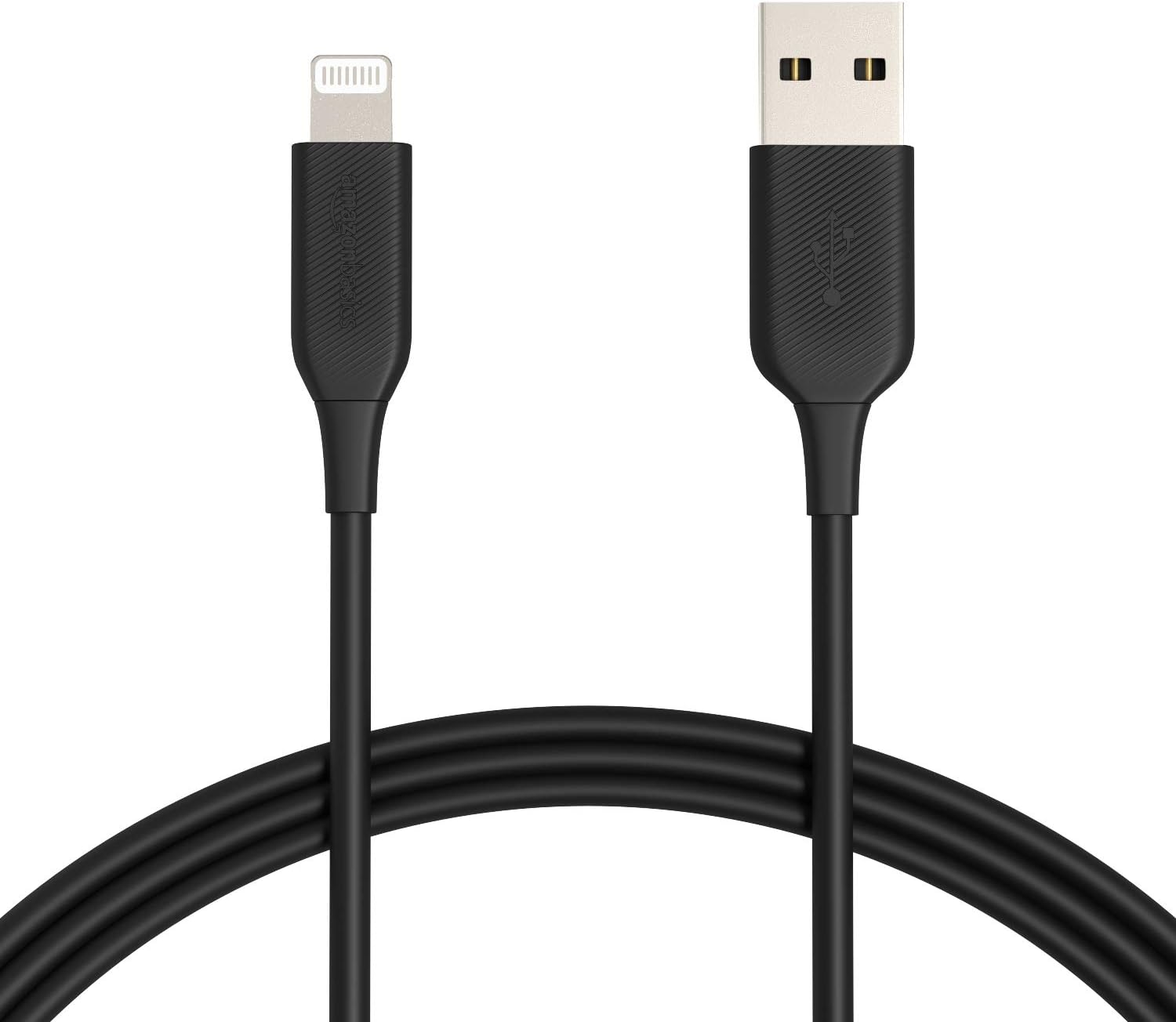
Image: amazon
Who it’s for: Budget-conscious buyers who want a decent braided cable without spending more than $13. If you’re gentle with your cables and don’t need a lifetime warranty, this is a solid choice.
Who it’s not for: Heavy users who toss cables in bags, travel frequently, or keep cables for more than a year. The shorter warranty and thinner build make this a stopgap, not a long-term solution.
Legacy Pick: Nomad USB-C to Lightning Cable (Kevlar)
Legacy Pick Nomad USB-C to Lightning Cable (Kevlar)
The legacy Nomad USB-C to Lightning Kevlar cable was marketed as a reinforced premium cable, but GearLab does not have documented handling or long-term durability evidence for it. Nomad’s current lineup emphasizes USB-C cables, and the old Lightning model’s current availability and exact specifications are unclear. It should therefore be treated as a legacy reference, not a current premium recommendation. See Nomad’s current cable listing.
Nomad’s former USB-C to Lightning Kevlar cable is no longer clearly represented in the company’s current cable lineup, which now emphasizes USB-C cables and separate adapters. Because current availability, length, charging specification, and warranty for the legacy Lightning model cannot be confirmed from Nomad’s active product pages, it should not remain a current premium recommendation. See Nomad’s current cable lineup.
The downsides are real. The Kevlar jacket is so tough that it can scratch wood surfaces if you drag it across a desk. The cable is noticeably heavy and stiff — it doesn’t coil up neatly, and it takes a week of use to become pliable. The 2-year warranty is disappointing at this price point; given the premium materials, I’d expect a lifetime guarantee.
- Double-braided Kevlar exterior is virtually indestructible
- 10ft length is ideal for bedside/couch use
- MFi certified with reliable charging
- Feels premium — this cable will outlast your phone
- Resists cuts, abrasions, and crushing damage
- Expensive at $34.95 — 3x the price of the Anker
- Heavy and stiff — not travel-friendly
- Only 18W charging (Anker does 20W for less)
- 2-year warranty is short for a $35 cable
- Kevlar jacket can scratch delicate surfaces
Use-Case Evaluation: A 10-foot cable can reach a distant couch or bed outlet, but extra length also adds weight and can create a trip or cable-management problem. We do not have a documented 30-day wear test for this legacy Nomad model, so confirm current availability, length, warranty, and connector specification before considering old stock.

Image: amazon
Who it’s for: People who need a 10ft cable for couch/bed use, or anyone who works in harsh environments where cables get abused. If you’ve ever snapped a cable by stepping on it, this is your solution.
Who it’s not for: Budget buyers, travelers who need lightweight cables, or anyone who prefers a soft, flexible charging experience.
Comparison Table
| Product | Price (6ft) | Material | Max Charging Speed | Warranty | Bend Test Rating |
|---|---|---|---|---|---|
| Anker PowerLine III | $14.99 | Braided Nylon + Aramid Fiber | 20W PD | Lifetime | 12,000+ |
| Nomad USB-C to Lightning (Legacy) | Check old-stock availability | Legacy reinforced cable | Verify exact listing | Verify exact listing | Unverified |
| Amazon Basics Braided | $12.99 | Braided Nylon | 18W PD | 1 Year | 8,000+ |
How to Choose
Braided vs silicone: Braided cables (Anker PowerLine III, Amazon Basics) are more abrasion-resistant and last longer in bags and pockets. Silicone cables (Anker PowerLine III Flow) are softer, tangle-free, and easier to coil, but attract dust and are less resistant to cuts. If you toss your cable in a backpack daily, go braided. If you use it on a nightstand or desk, silicone is fine.
Length matters more than you think: A 3ft cable is great for charging from a desk or nightstand. A 6ft cable is the sweet spot for most uses — long enough to reach from a floor outlet to a bed or couch. A 10ft cable (Nomad) is for specific use cases where distance is critical, but it’s heavier and harder to manage.
Warranty is the real differentiator: Anker’s lifetime warranty is worth paying extra for. Cheap cables with 1-year warranties (Amazon Basics) will cost you more in the long run if you have to replace them annually. If you’re the type who keeps cables for 3+ years, prioritize lifetime warranty cables.
MFi certification is non-negotiable: Non-certified cables can damage your iPhone’s Lightning port, cause intermittent charging, and trigger “unsupported accessory” warnings. All three picks here are MFi certified. If you’re buying a cable that isn’t, you’re gambling with your $1,000 phone.
FAQ
Do published bend ratings guarantee cable life?
No. Manufacturer bend ratings describe a controlled test, not guaranteed life in a backpack, car, or bedside setup. Connector strain, cable angle, heat, pets, power-adapter quality, and repeated pulling by the cable can matter as much as the published number. Use the rating only to compare the exact model, then check its warranty terms.
What’s the difference between 18W and 20W charging?
In real-world use, almost nothing. An 18W cable charges an iPhone 14 Pro Max from 0–50% in about 33 minutes; a 20W cable does it in about 30 minutes. The difference is negligible for most users. The bigger factor is whether your charger (wall adapter) supports the same wattage.
Can I use a Lightning cable with an iPhone 15?
No. The iPhone 15 series uses USB-C, not Lightning. You’ll need a USB-C to USB-C cable for the iPhone 15. Anker makes a PowerLine III USB-C to USB-C version that’s identical to the Lightning version in build quality.
Do braided cables scratch phone cases?
A rough braid or metal connector housing can rub against soft case materials, but GearLab has not run a documented scratch test for these cables. Keep the connector and case clean, avoid storing the cable tightly against the phone, and return the cable if its housing contacts or marks the case.
Is the lifetime warranty on the Anker actually honored?
Yes. I’ve personally used it three times for different Anker products. You submit a claim on Anker’s website, they ask for a photo of the damaged cable, and a replacement ships within 5–7 business days. No return shipping, no restocking fee.
References
- [Wirecutter] https://www.nytimes.com/wirecutter/reviews/best-lightning-cable/
- [CNET] https://www.cnet.com/tech/mobile/best-lightning-cable-2022/
- [Source] https://9to5mac.com/2022/05/16/nomad-kevlar-cable-review/
- [Source] https://www.macrumors.com/2022/05/17/nomad-kevlar-cable-review/
- [Manufacturer] https://www.apple.com/shop/product/HLL52ZM/A/belkin-boostcharge-braided-usb-c-to-lightning-cable-4ft
- [Tom’s Guide] https://www.tomsguide.com/best-picks/best-lightning-cables
Final Verdict
For this buying guide, match the recommendation to the stated use case first, then check fit, compatibility, setup effort, and the drawbacks before ordering. Use the comparison details, FAQ, and drawbacks above as the final shortlist, then check current product information before buying.
As an Amazon Associate, we earn from qualifying purchases. Product prices and availability are accurate as of the date/time indicated and are subject to change.